Vinyl Nostalgia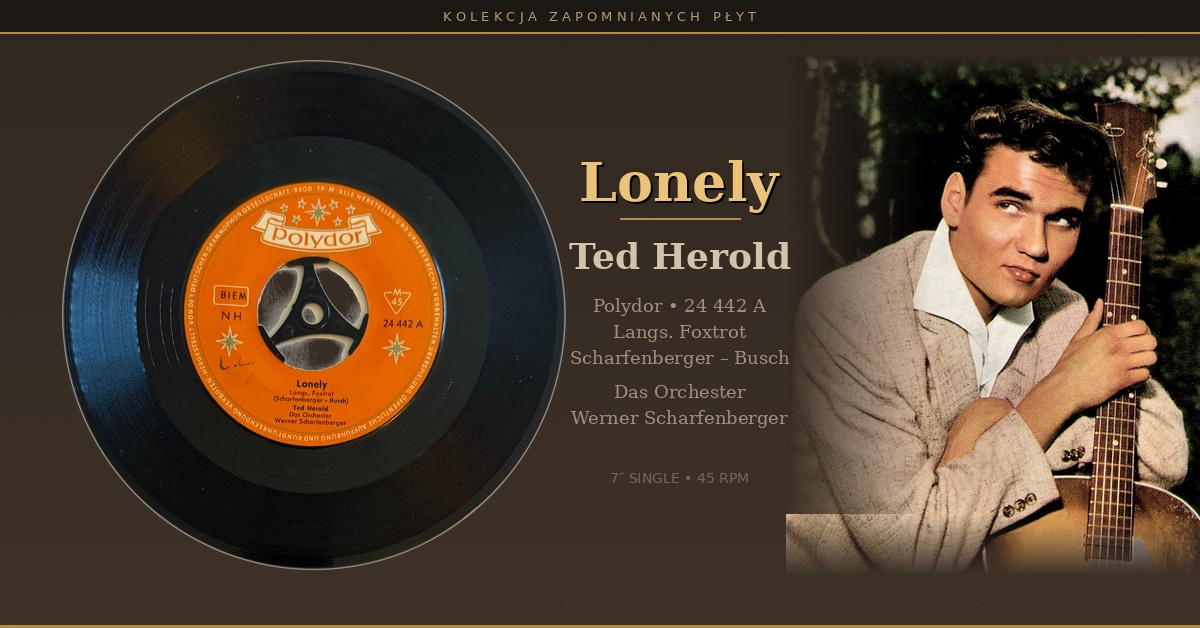
Anywhere in the world, you can find a graveyard of forgotten vinyl records. A place where dusty, unwanted black discs—both small and large—lie, filled with music that no one listens to anymore. Sometimes they’re priced at a few zlotys (or euros), and sometimes they’re even tucked away in a box labeled “free.” That’s exactly the kind of box I found in a corner on the mezzanine at the Vinylla store in Riga.

The store is located at Lāčplēša iela 31, right in the heart of Riga. From the moment you step inside, you’re struck by a unique, almost homey atmosphere—plenty of shelves, the smell of old vinyl, and walls lined with album covers. There you can find rare releases from the Latvian label Melodia, Baltic jazz, and progressive rock from the Soviet era, as well as all sorts of odd albums from different parts of the world.
I went there to rummage through the record crates, but as I headed upstairs, I noticed a cardboard box with “for free” handwritten on it in various languages. The best finds had already been taken, though almost all the copies there were certainly either unwanted or very worn out. Anyway, I looked through what was there and decided to take a few singles that caught my eye. One of them was a small record with two songs by the forgotten German singer Ted Herold.
Ted Herold: The German Elvis Who Had an Edge
The turn of the 1950s and 1960s in Germany was a fascinating time of the “Halbstarken”—angry young people in jeans and leather jackets. German rock ’n’ roll at the time was a battleground between the authentic American sound and attempts by the older generation of producers to “tame” it. In West Germany (FRG), there was a clear division between two camps of fans:
- Peter Kraus (“The Good Boy”): He was the darling of parents and the media. Although he sang rock ’n’ roll, he did so in a safe, smiling, and elegant manner. Kraus was seen as “Germany’s answer to Pat Boone.” His success was enormous (he sold over 12 million records in just a few years).
- Ted Herold (“The Wild Rebel”): He was the answer to the demand for real, raw rock ’n’ roll. He was the “German Elvis”—with his characteristic “primitive” energy, leather jackets, and raw voice. The press often pitted him against Kraus, suggesting that Ted was “more authentic” but also more “dangerous” for young people.
Fans of both artists often clashed in the pages of Bravo magazine, and the record labels (both recorded for Polydor!) cleverly stoked this rivalry to boost sales.
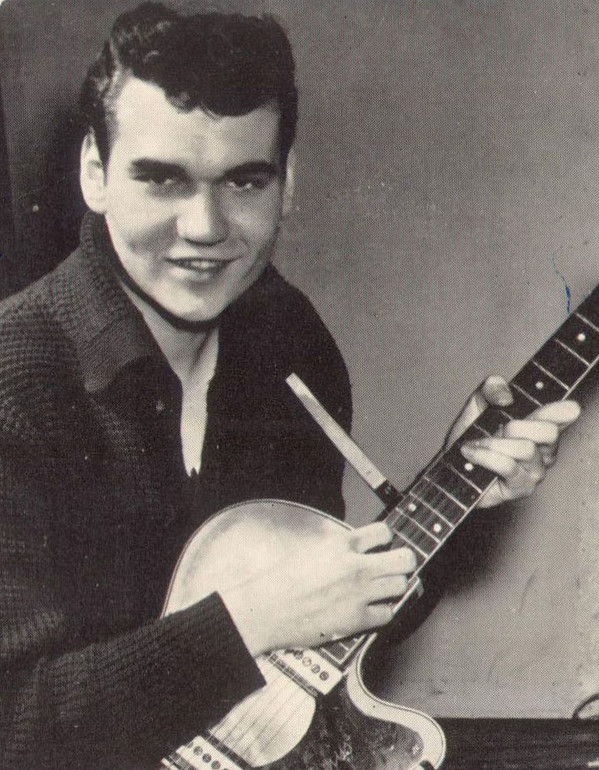
Born Harald Schubring, Ted Herold had a true rock-and-roll instinct. While Peter Kraus smiled from album covers as the “perfect son-in-law,” Herold was seen as someone more unpredictable. He had a low voice that could turn into a predatory rasp, and an instinctive stage presence that drove conservative parents wild. At the time, the press wrote about him as a “dangerous imitator from across the ocean,” which only fueled his following among rebellious youth.
He was considered one of the few European artists capable of capturing the distinctive “vibe” of American rockabilly, and apparently vinyl collectors from around the world (including Japan and the U.S.) regard his early recordings as rarities of the genre. I don’t know if that’s actually true, but if I hadn’t stopped by Vinylli in Riga, I probably would never have learned about this now-completely-forgotten artist.
Herold’s musical career was interrupted by military service in 1963 and changing musical trends (the advent of the Beatles era). He then withdrew from the industry and became a radio and television technician. He made a triumphant comeback in the late 1970s thanks to his collaboration with Udo Lindenberg and a wave of nostalgia for rockabilly. Despite his immense popularity in German-speaking countries, Ted Herold never became a global star on the scale of Elvis or Cliff Richard. This was mainly due to the language barrier (he sang almost exclusively in German). The musician died along with his wife in a fire at their home in Dortmund in November 2021.
The single I found in Riga is “Lonely / Oh So Sweet.” The record was released in March 1961 by Polydor (catalog number: 24 442). The songs were written by composer Werner Scharfenberger and lyricist Fini Busch—a duo responsible for many German hits of that era. Although Herold was known for rock and roll, this single straddles the line between Schlager (German pop music) and softer rock, which was typical of the record labels’ efforts at the time to “tame” rebellious artists.
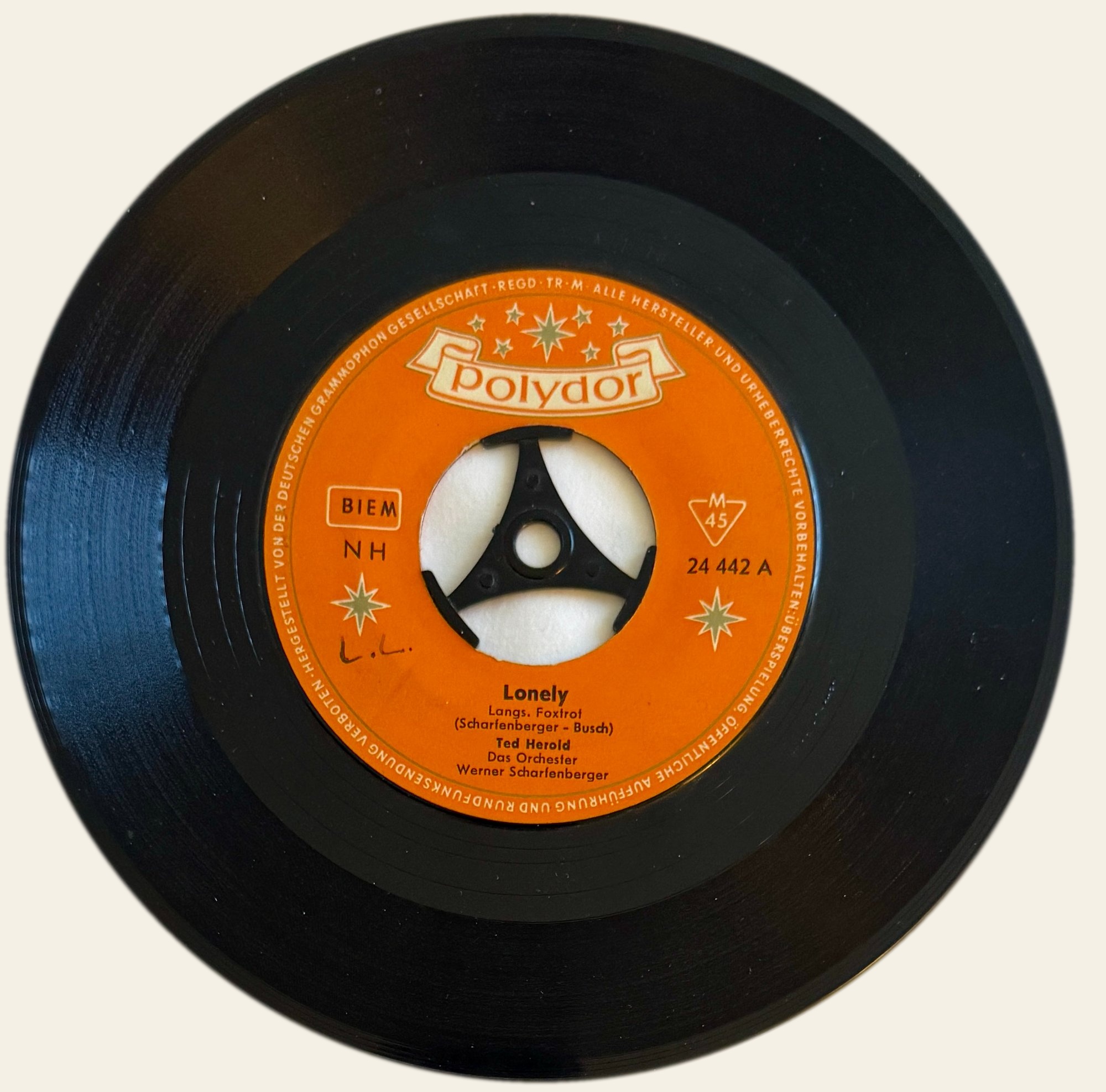
The few available sources from that period confirm that the youth press received this single enthusiastically, highlighting the artist’s new, “more mature” side.
“In ‘Lonely,’ Ted proves that he no longer needs just screaming and a heavy beat to captivate the listener. His voice has gained a depth that makes girls tremble not only to the rhythm of rock but also to sentimental ballads,” wrote *Bravo* magazine in 1961
Another review notes that “Schubring [Herold’s real name] is no longer just a copy of Presley. *Lonely* is a solid German production that shows that homegrown rock ’n’ roll can be melodic and accessible to a wider audience.”
Release details
Side A: “Lonely” (2:39) – An atmospheric ballad that perfectly showcased Herold’s deep baritone voice. The song reached No. 24 on the German charts.
Side B: “Oh So Sweet” (2:18) – A slightly livelier track in the “soft rock” style, demonstrating how the German scene adapted American influences to local tastes (so-called Schlager-Rock).
Format: 7-inch vinyl, 45 RPM (revolutions per minute).
Artwork: The single was released in Polydor’s characteristic “generic sleeve” or in a dedicated picture sleeve.
I tried to find out how this record ended up in Riga. Herold was unknown in Anglo-Saxon markets. At that time, exports of German pop music to the U.S. were practically nonexistent (with a few exceptions, such as Bert Kaempfert). Only one of his singles, “I Don’t Know Why / Moonlight (English version),” was released in the United Kingdom (Polydor 66 817) in 1960—a rarity for a German artist—but it did not make it onto the UK charts. And so Herold never achieved international stardom in the English-speaking world, as those markets were saturated with their own idols at the time, and the language barrier was nearly insurmountable for Europeans back then.
In East Germany, he was banned from official media as a symbol of “Western decadence,” which only fueled his popularity among young people who listened to radio broadcasts from West Germany, though vinyl records featuring his music never made their way there.
Ted Herold enjoyed his greatest success in Austria and Switzerland, where he was a regular on the local charts; there, he was treated on par with local stars. His records were also distributed in Belgium and the Netherlands, where the rock ’n’ roll scene was very receptive to European variations of the genre. Trace amounts of copies made their way to Denmark and Sweden, where there was a strong rock ’n’ roll fan base, though there he lost out to English-language artists. And perhaps that’s exactly how “my” single made its way to some rock ’n’ roll fan in Latvia.