
 Vinyl Nostalgia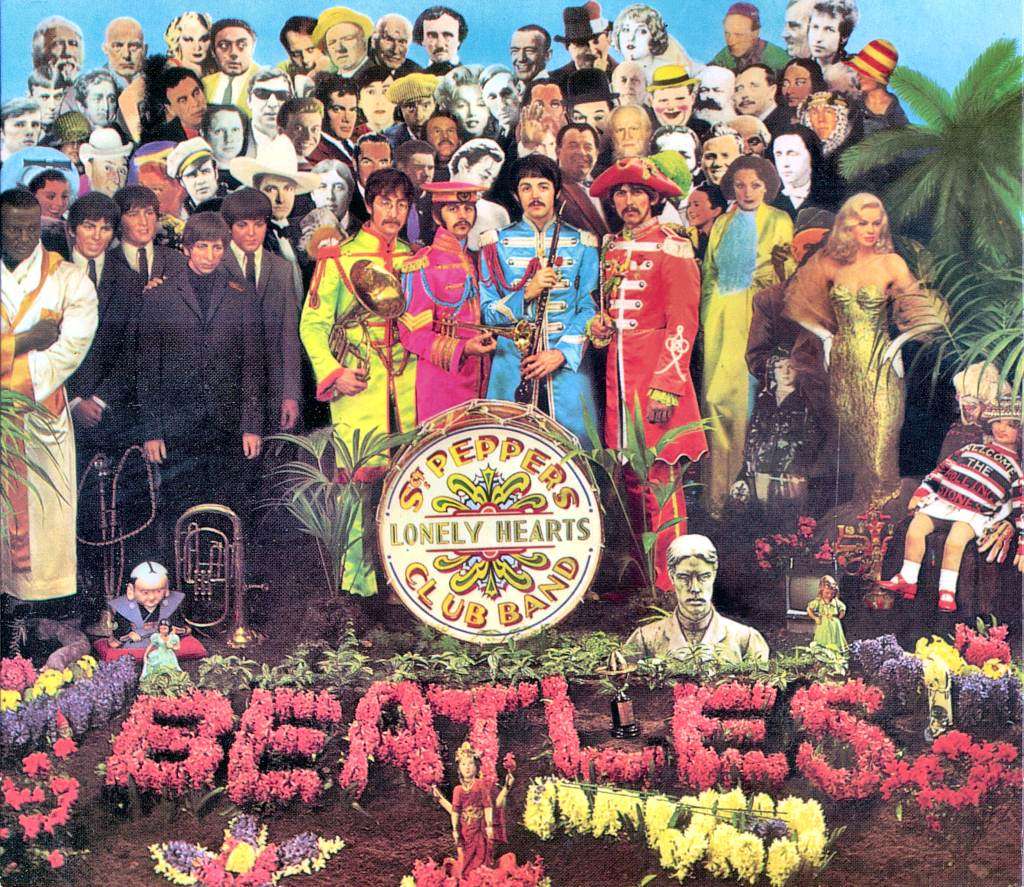
Apparently, there are about 600 different editions of The Beatles’ album „Sgt. Pepper’s Lonely Hearts Club Band,” so it’s no wonder that even collectors sometimes can’t figure out which is which. Recently, while browsing through a record store in Warsaw, I came across a copy of a very interesting edition of this album, one that you won’t find listed in any official catalogs.
The edition I’m referring to features a rare black-and-white EMI/Parlophone label, a so-called “two-box” label, because the EMI logo appears on it twice. It is most likely the sixth British pressing in a version found exclusively from late 1970 to early 1973.
The oval text on the edge of the label begins with the words “The Gramophone Co Ltd” instead of “EMI Records Ltd,” which helps pinpoint the release date. The British (domestic) division of EMI, The Gramophone Co. Ltd., officially changed its name to EMI Records Ltd. in late 1973, and from that point on, the text on the labels was definitively corrected.
The second distinctive feature is the so-called matrix (a code engraved in the record’s run-out groove): yex 637-1 and yex 638-2, where the first letter ‘y’ indicates the stereo version (to distinguish it, the mono release code began with ‘x’), and the last letter indicates the subsequent version of the cut matrix.
In this specific case, side one of the record was pressed from the original 1967 master, while side two is a version of the master re-cut in 1971.
From these two facts, we can conclude that the album I found was pressed between late 1971 and early 1973.
It’s worth noting that you can still find similar editions here and there, but with ‘-1’ on both sides, and that would be the sixth pressing of Sgt. Pepper from 1970. Audiophiles still debate which side of the album sounds better (-1 or -2), but regardless of the eventual verdict, we’re talking about a record that’s about 50 years old and sounds phenomenal. What’s more, it sounds exactly as it did to those who, in London stores, were snapping up brand-new, ink-scented copies of what is widely considered one of the most important albums in the entire history of popular music worldwide.
Speaking of the scent of printing ink, it’s also worth noting that the two-box edition (the sixth pressing of Sergeant Pepper) was packaged in the third version of the sleeve (Third Edition Sleeve) with the text “Printed and made by Garrod & Lofthouse Ltd.,” which is in fact the only simple way to identify this specific version of the sleeve (the two previous editions had a slightly longer version of this note).
In 1973, an edition pressed in France was also released, but it is easy to identify because instead of “Made in Great Britain,” it bears the inscription “Made in France.”
Share Your Opinion