Vinyl Nostalgia
If you collect Beatles records, sooner or later you’ll catch the bug of hunting down their first pressings (from the UK, of course), which may sound different from those pressed today, but not only do they have “cult” status—they also let you hear the music exactly as it sounded 50–60 years ago.
One could also argue whether the first Japanese, American, or German pressings are just as good, but the fact remains: it is the records pressed in the UK that are valued the highest (with some exceptions) among audiophiles and collectors. And that is the only type we are interested in here.
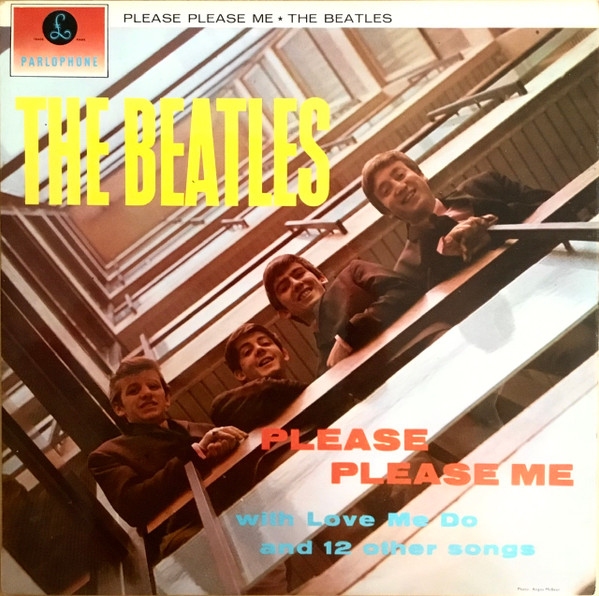
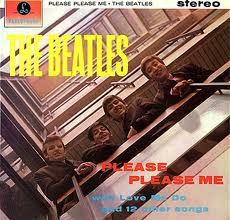
In virtually every list of the most valuable record releases in history, we find the first pressing of the Beatles’ debut album, “Please Please Me.” A well-preserved copy of the stereo version (catalog number PCS 3042) is valued today at up to 3,000 GBP (approx. 3,971 USD) (British pounds), or approximately 15,000 PLN (approx. 3,829 USD). The mono version (catalog number PMC 1202) is cheaper; it can be bought or sold for around 750 pounds (source: Rare Record Price Guide 2006). Regardless of the price or the quality of the record itself, first-pressing copies are rare (only about 600 copies of the stereo version were produced) and are becoming increasingly difficult to find on the market, which makes them a valuable investment asset whose value is likely to rise year after year.
For every Beatles collector, the label is of key importance. Before purchasing any record, you must carefully check the label and matrix codes (the numbers and letters imprinted on the edge of the record, i.e., the unused area after the last track on both sides), keeping in mind that sellers in record stores and secondhand shops often aren’t fully versed in the details and rely solely on information from Discogs (unless you happen to come across a true fan of the Fab Four).
So let’s start with the “Please Please Me” label (first pressing).

Generally speaking, the first and second pressings of “Please Please Me” feature a black-and-gold label with the Parlophone logo. The third and fourth (1963), fifth (1964), sixth (1965), and seventh (1968) pressings already have a black -yellow label with the Parlophone logo; the 1969 release has black-and-silver labels with an additional EMI logo in a frame (the so-called “one-box”); and after 1970, black-and-silver labels with two additional EMI logos in two frames (the so-called “two-box”).
The label of the first pressing contains an incorrect indication of the publishing rights for the following four songs: “I Saw Her Standing There,” “Misery,” “Do You Want To Know A Secret,” and “There’s A Place,” for which “Dick James Music Co.” is listed. Starting with the second pressing, “Northern Songs” appears there.

The second pressing, produced almost immediately after the release of the first edition, also featured a black-and-gold label, but with a corrected track list and the copyright holders correctly identified. The stereo version of the second pressing was released in a run of fewer than 900 copies and is just as rare and highly valued by collectors as the first pressing.
The matrix codes for the first few pressings of this album in the stereo version are:
Side 1: YEX 94-1
Side 2: YEX 95-1
and for the mono version:
Side 1: XEX 421-1N
Side 2: XEX 422-1N
In the case of this specific record, the matrix codes are the same in the first pressings, so they do not serve as a clear indicator of authenticity.