Vinyl Nostalgia
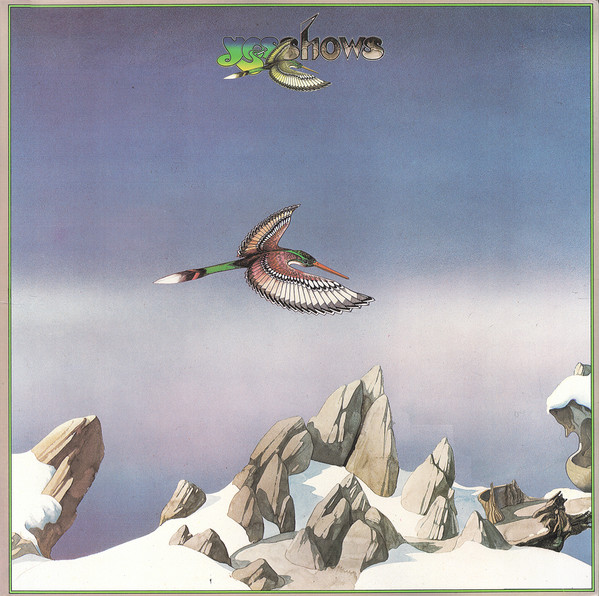
I happen to have a double live album, Yesshows, released in November 1980 (Atlantic – K60142), a few months before Yes disbanded. It contains recordings from concerts between 1976 and 1978, including the song „Don’t Kill The Wale,” recorded in 1978 in London.
I bought this album quite by accident because I hadn’t planned to, but I got a special offer with another album, and I chose it partly on impulse, and partly because I really like live albums and this one just happened to fall into my hands. Regardless, it’s very interesting material, at times quite psychedelic (side 4 is downright difficult to listen to in places) and with long stretches of audience reaction.
Yesshows is the second official Yes live album, released in the US on 24 November 1980 and in the UK on 19 December of the same year — the final release before the group disbanded in early 1981. Its timing was not accidental. By mid-1980, Anderson and Wakeman had departed, Trevor Horn and Geoff Downes of The Buggles had joined, Drama had been recorded and released, and Atlantic wanted a live album. Squire had been sitting on a set of carefully prepared mixes from concerts during the 1976–78 period; the label used them. As Wakeman noted with mild bemusement, „The next thing I know was that somebody gave me a copy.”
Five Concerts, Two Eras
The album draws on seven recordings from five specific concerts: Cobo Arena in Detroit on 17 August 1976; Festhalle in Frankfurt on 18 November 1977; Ahoy-Halle in Rotterdam on 24 November 1977; and Empire Pool, Wembley on 27 October 1978, with one additional Wembley recording from the following night. That geographical spread across two years produces an album that features two different keyboard players — and two meaningfully different versions of the same band.
„The Gates of Delirium” and „Ritual” — occupying most of sides B and C on the original vinyl, both running well past the ten-minute mark — come from the 1976 Detroit show, during the Relayer tour with Patrick Moraz. The Swiss pianist’s jazz-fusion instincts give these recordings a looser, more improvisational quality than any studio equivalent. The remaining five tracks — „Parallels”, „Going for the One”, „Time and a Word” and „Wonderous Stories” from Rotterdam and Frankfurt in November 1977, plus „Don’t Kill the Whale” from the 1978 Wembley show — feature Rick Wakeman, who had returned to the fold for the Going for the One and Tormato tours.
The presence of „Time and a Word” — from Yes’s second album, released in 1970 — is one of the more quietly significant choices on the record. In the context of a live document spanning 1976 to 1978, pulling back to 1970 suggests that Squire was consciously drawing the arc of an entire decade, not just a promotional cycle.
The Tormato Correction
Listeners who had spent two years puzzling over the murky, compressed sound of Tormato — the causes of which, as detailed in our article on that album, came down to a Dolby A decoding error that went undetected until 2013 — will find the live version of „Don’t Kill the Whale” instructive. Stripped of the studio disaster and placed on a Wembley stage, the track sounds re-energised and considerably more forceful than anything on the studio record. One American reviewer noted at the time that the live version sounded better than the studio take, which „isn’t difficult, given that the whole of Tormato sounds like it was recorded in a series of broom closets and fish tanks.” That assessment is harsh but not entirely wrong, and it says something about the quality of the underlying song that it survives the comparison well.
Reception and Context
Opinion within the band was divided on the album’s release. White, Squire and Moraz were broadly positive; Anderson, Wakeman and Howe were less enthusiastic, though none were in a position to intervene — Wakeman learned about the release when someone handed him a copy. The album peaked at No. 43 on the US Billboard 200 and No. 22 in the UK, reasonable figures for a document that was already retrospective by the time it appeared.
For fans who had found Drama difficult — Horn was reportedly booed at several shows during the tour, saddled with the impossible task of replacing Anderson — Yesshows functioned as a reminder that the classic lineup’s live power had been considerable, and considerably more impressive than some of their mid-period studio work had suggested. Roger Dean’s cover, a surrealist landscape of rock formations in his signature palette, completed the visual grammar of the era — his return to the sleeve after the two Hipgnosis albums (Going for the One and Tormato) closing the aesthetic loop on a decade of prog.
As a vinyl object, Yesshows presents one particular frustration for the purist: „Ritual” is split across two sides on the original double LP, interrupting its 28-minute arc at a structurally awkward point. The 2009 Japanese SHM-CD remaster, part of the „Yes SHM-CD Papersleeve” series, is the most sympathetic presentation of the album to date.
Labels
Unlike Tormato, this album received the standard, typical Atlantic Records labels commonly used in the 1970s and 1980s.
Matrix / Runout
My copy has the following matrix numbers, indicating an original British first pressing:
Side 1: K 60142 A-20 W-15
Side 2: K 60142 B-20 W-14
Side 3: K 60142 C-20 W-14
Side 4: K 60142 D-20 W-13