
 Vinyl Nostalgia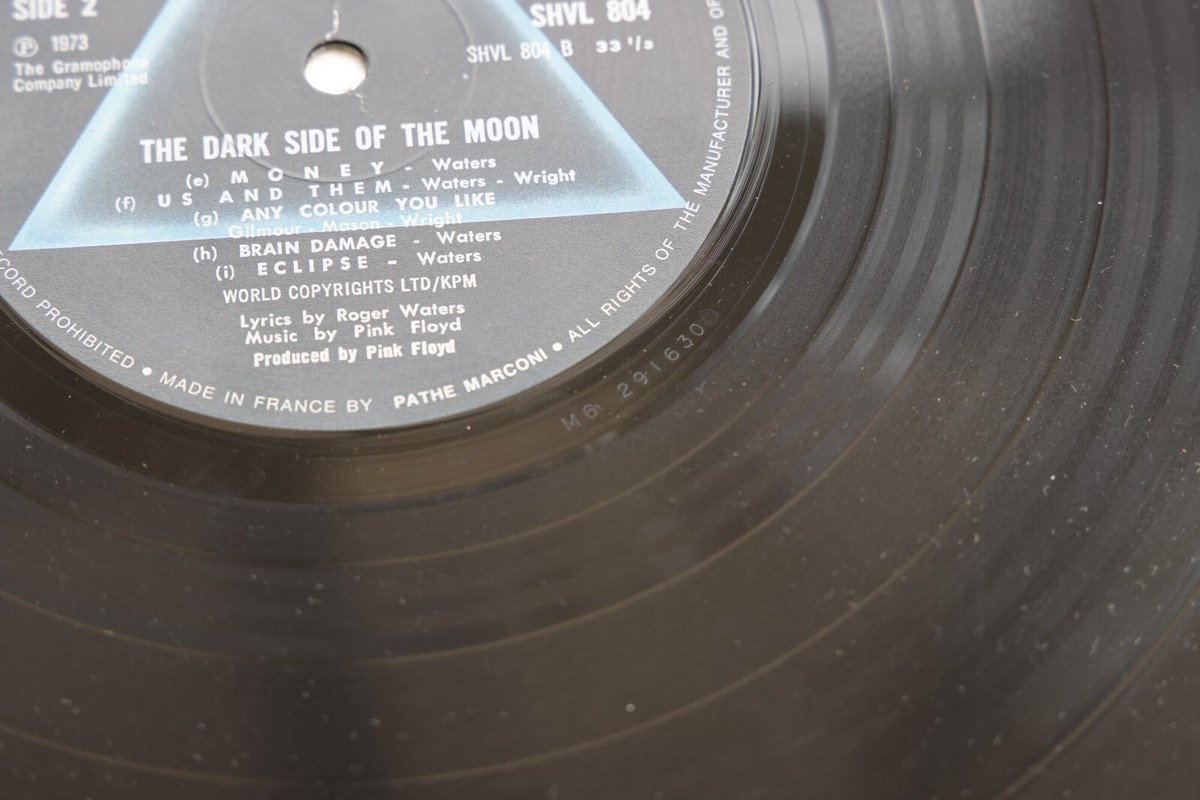
Vinyl collecting sometimes calls for a touch of Sherlock Holmes. In the previous piece I covered the SIAE marks on Italian pressings. This time we head into French matrix codes. In Italy the collector squints at a circular stamp on the label; in France you pull the record from its sleeve and stare hard into the dead wax. There, right next to the matrix number, sits a string of characters along the lines of „M6 282022” or „M3 256671”. Those codes carry a fair bit of information, provided you know how to read them.
Where the M codes on Pathé Marconi pressings come from
Pathé-Marconi was the French arm of EMI, with its pressing plant in Chatou (Yvelines, west of Paris). The plant operated at that address from 1929, although the company’s own roots go back to 1897. In 1951 Chatou became the first plant on the European continent to press microgroove records (33⅓ and 45 rpm). And it was around then that codes beginning with the letter M started turning up in the dead wax.
The principle was straightforward. The letter M identified the Pathé-Marconi plant. The number that followed indicated format: M3 for 7-inch singles (and the occasional 10-inch), M6 for 12-inch long-players, M9 for double LPs. After the prefix came a six-digit number, most likely a sequential lacquer cut number. Most likely, because no official EMI document spells the interpretation out. A handful of Discogs users arrived at the conclusion in 2014 by comparing hundreds of dead-wax photographs. They noticed that M6 numbers rise linearly over time: Sgt. Pepper’s copies from 1967 carry M6 253549, the White Album from 1968 carries M6 262622, the contract Beatles pressings of 1973-75 land in the M6 297-298 thousand range, and Iron Maiden from 1983 are already up at M6 342447.
How to read the dead wax of a French pressing, step by step
The clearest way is on a specific example. Take Pink Floyd’s Meddle, French pressing from 1974, side B. The dead wax reads:
SHVL 795 B 21 M6 282022 [Pellé, hand-etched]
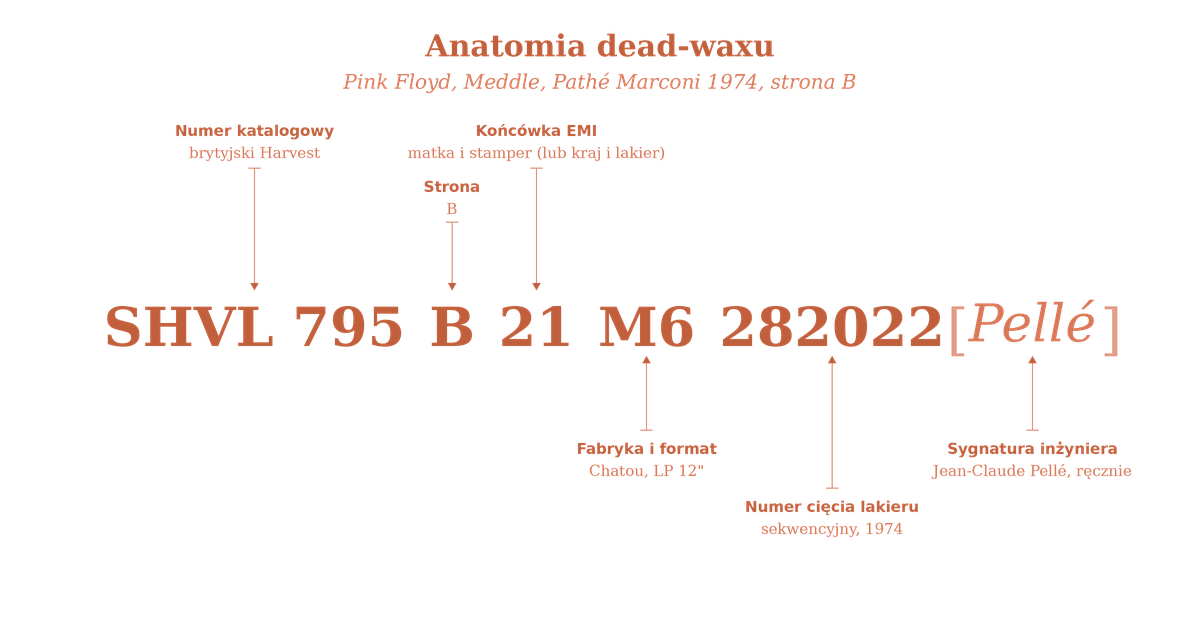
Now to decode it. SHVL 795 is the British Harvest catalogue number for the album. The letter B identifies side B. The 21 is a familiar EMI suffix, although this is where an interesting source dispute opens up, which I will return to in a moment. M6 is the Chatou plant code plus the format (12-inch LP), and finally 282022 is the six-digit lacquer cut number. We also find the word Pellé etched in by hand, the signature of Jean-Claude Pellé, one of the two documented cutting engineers employed at the Pathé-Marconi studios. The other was Louis Baroux. Both names appear in Pierre Lafitan’s article on the Boulogne studios for En-Contact.
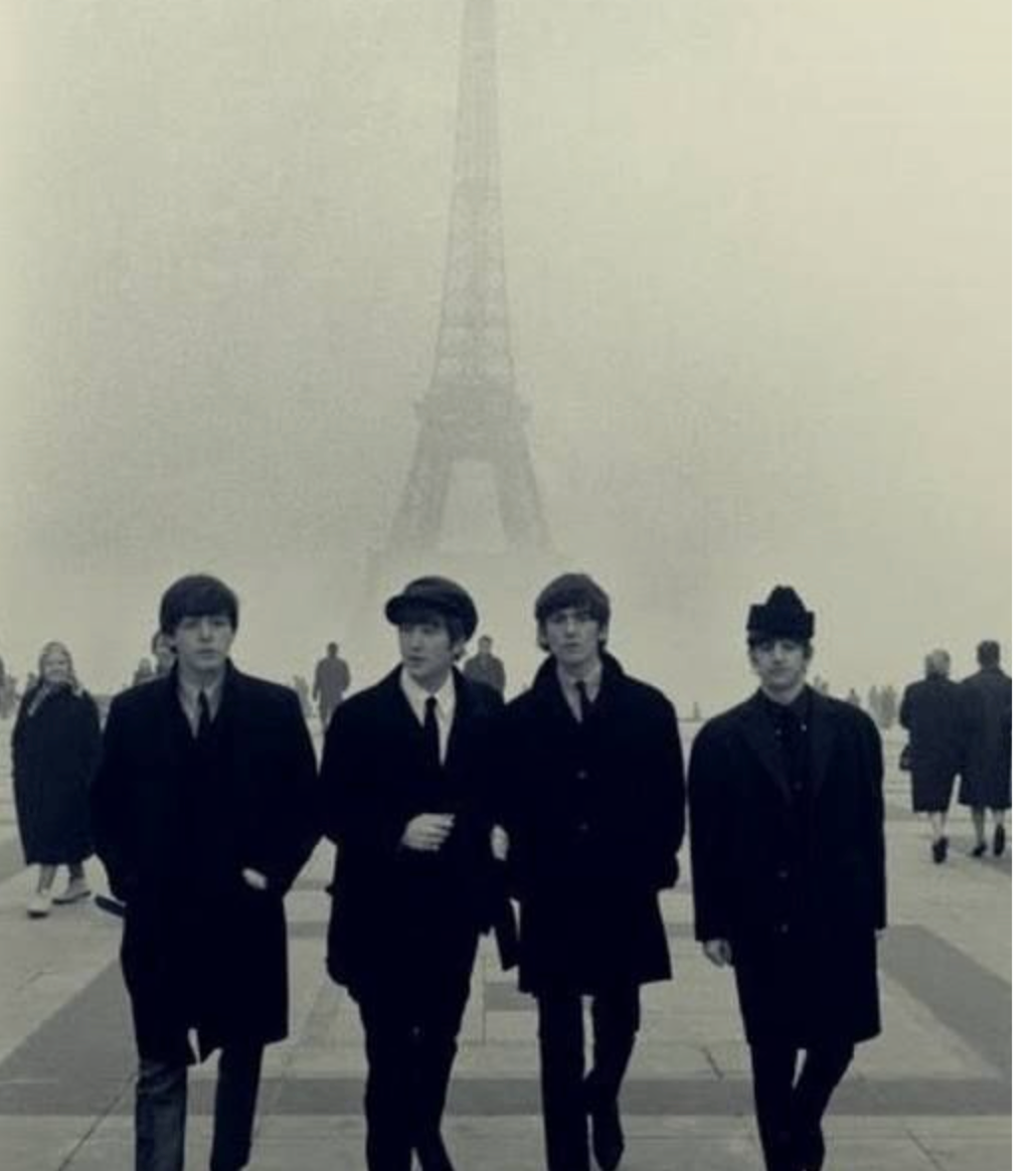
The Pathé-Marconi studios in Boulogne-Billancourt (rue de Sèvres) were the rooms where the Beatles cut the German-language versions of „She Loves You” and „I Want to Hold Your Hand” in January 1964. What is far less widely known is that the basic track of „Can’t Buy Me Love”, later released on A Hard Day’s Night, was also laid down there in Paris. George Harrison only added his guitar solo after returning to London, but the backbone of the song is purely Parisian.
The Rolling Stones eventually made the place their musical home. They cut Some Girls there, with sessions running from October 1977 through March 1978. And it was there, too, that Pellé and Baroux were cutting the lacquers for French productions. The records themselves were pressed at the Chatou plant, fifteen kilometres away.
The „21”, „21B”, „22B” suffix, or a source dispute
Back to that 21 in front of the M6 code. The sources part company here, and there is no clean way to settle it without further documentation.
The first hypothesis, the one most widely cited, draws on the standard British EMI system. The first digit after the YEX/SHVL number is the so-called mother number, the second digit or letter is the stamper number. So 21 would mean second mother, first stamper. That is how mootzproductions.com explains it in its widely shared guide „About Beatles UK EMI Matrix and Mother Stampers”, in keeping with a convention familiar to Beatles collectors. The British EMI stamper system used the word GRAMOPHLTD as a numerical key, where G=1, R=2, A=3 and so on.
The second hypothesis, far less well established, comes from a popsike user who, while describing an auction of a first French pressing of the White Album, suggested reading the 21 the other way around. On his account, the first digit (2) is a country indicator (France), and the second (1) is the lacquer number. Unfortunately this reading turns up in a single source, and I have not found independent confirmation for it elsewhere.
The Beatles contract pressings, 1973-1975
This thread deserves a section of its own, because anyone hunting Beatles records will sooner or later run into copies pressed in France on EMI’s contract.
In 1973 the global oil crisis squeezed vinyl supply, and EMI was simultaneously refurbishing its main pressing plant at Hayes (Middlesex). Part of the British market production was temporarily contracted out to Pathé Marconi. The arrangement covered the entire Beatles catalogue and other EMI titles.
These French pressings are easy to spot. The first place to look is the sleeve, where the front may carry a small white rectangular „Made in France” sticker. On the label, the identifier sits in the rim text running along the inner edge, where the words „MADE IN FRANCE” appear at the end. Final confirmation lies in the matrix numbers in the dead wax. There you will find two sets of matrix codes: a British one (such as YEX 749-2 for side A of Abbey Road) and a French one (M6 297252).
The contract titles cover essentially the entire Beatles catalogue: Please Please Me (PCS 3042), Sgt. Pepper’s Lonely Hearts Club Band (PCS 7027), The Beatles (the White Album, PCS 7067/8), Abbey Road (PCS 7088) and Let It Be (PCS 7096). The M6 numbers for this run cluster in the 297-298 thousand range, consistent with lacquer cuts done in 1973-1975.
Which brings us to a little-known footnote. The only UK Beatles single ever pressed in France is „Hello Goodbye / I Am The Walrus” (Parlophone R 5655). Some copies from November 1967 came out of Pathé Marconi. On these, the „MADE IN GT. BRITAIN” line at the foot of the label is replaced with „MADE IN FRANCE”. The dead wax carries two matrix sets, 7XCE 18433-1 and M3 256671 (M3 because it is a 7-inch single), along with the British KT tax code.
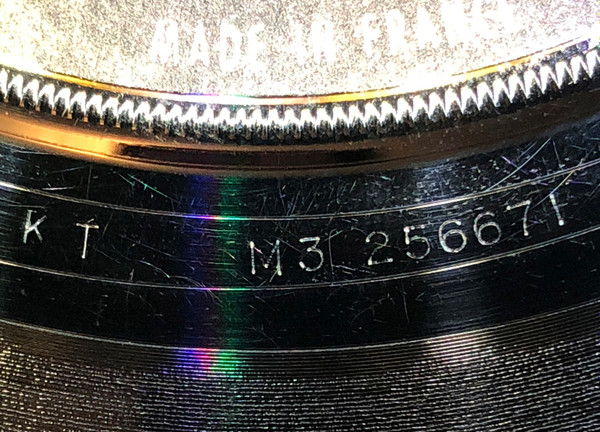
These copies were most likely produced because of a vinyl shortage in the UK or in response to the sheer demand for Beatles releases.
Dating by M6 number, or what we actually know
Above all, an M6 code confirms that the record came out of Chatou, regardless of which country it was sold in or what the label says. So we know it is not a Hayes pressing, and not from any of EMI’s other plants. It also confirms the original format of the record if you are buying remotely (M3 = single, M6 = LP, M9 = 2xLP).
Some auction listings flatly claim that „the M6 number indicates the year of pressing”. That is too tidy. There is no publicly available year-by-year M6 calibration table comparable to the one italianprog.com and pinkside.it have built for SIAE stamps. We know the numbers rise sequentially over time, so reasonable inferences are possible. Pinpointing the year, though, would require calibration against several hundred copies with documented release dates. As things stand, even with AI as a search aide, no such study has surfaced. Roughly speaking, each decade adds something like 50,000 to 70,000 new numbers. So with a fair degree of confidence we can say that 1960s M6 codes top out around 270-280 thousand (M6 262622 is the White Album, French release of 1968), the 1970s run from there to about 330 thousand (M6 297254 is Sgt. Pepper, contract pressing of 1973-75), and the 1980s run from 330 to 380 thousand (M6 350707 is Kraftwerk’s Trans-Europe Express, the 1985 French reissue).
What an M6 code will not tell you
It will not, first of all, give you an exact year of pressing, only an approximate window. Nor will it tell you whether you are holding the first, second or fifth pressing of a given album. A low M6 number does not mean better-sounding or more audiophile in any sense. The audiophiles on the Hoffman Forums regularly champion the French Iron Maiden contract pressings for their distinct mastering character compared with the British „originals”, but that may simply reflect Pellé cutting his lacquers differently from Harry Moss or Tony Bridge at Hayes.
And one more thing. M6 does not just mean „export”. Through the 1970s and 1980s, Chatou pressed both French releases and contract copies for the British and West German markets. All of them carry M6 in the dead wax, regardless of where the records ultimately ended up on sale.
Collector’s view
A French Beatles contract pressing is, as a rule, noticeably cheaper than a British original, even though it often comes from the same UK stampers (-1) and sounds the same. For anyone who wants their own copy of, say, the White Album without spending several hundred pounds on it, the French PCS 7067/8 (pressed at Chatou) is a serious option. As long as you know what you are looking for. Which is, in the end, the main reason it is worth learning to read M6 codes at all.
| Code | Format and period | What it means | Identifying features in the dead wax | Example |
|---|---|---|---|---|
| M3 single | 1951 to 1990. 7-inch singles, occasionally 10-inch | M = Pathé Marconi plant in Chatou. 3 = single format | The M3 prefix is followed by a six-digit lacquer cut number. Often accompanied by an engineer’s signature (Pellé, Baroux) | Beatles, „Hello Goodbye” (Parlophone R 5655, 1967): 7XCE 18433-1 M3 256671. The only UK Beatles single ever pressed in France |
| M6 LP | 1951 to 1990. 12-inch LPs | M = Pathé Marconi plant in Chatou. 6 = LP format | The M6 prefix is followed by a six-digit lacquer cut number. Numbers rise sequentially over time (1960s up to roughly 270-280 thousand, 1970s 280-330 thousand, 1980s 330-380 thousand) | Pink Floyd, Meddle (1974): SHVL 795 B 21 M6 282022 [Pellé]. Textbook example of the system at work |
| M9 2x LP | 1951 to 1990. Double 12-inch LPs | M = Pathé Marconi plant in Chatou. 9 = double LP format | Used sparingly, mostly on double albums (some White Album variants, for instance) | Less common in the wild. Most 2xLPs simply carried two M6 codes, one for each disc |
|
Quick check: An M in the dead wax = pressed at Chatou. The digit after the M = format. The six-digit number = lacquer cut number. A hand-etched Pellé or Baroux signature = the cutting engineer at the Pathé-Marconi studios in Boulogne-Billancourt. Source notes: The system was decoded by Discogs collectors (sebfact, dead_parrot) in a 2014 thread, working from hundreds of sample comparisons. Official EMI documentation does not spell this out explicitly. The named cutting engineers (Pellé, Baroux) come from Pierre Lafitan’s En-Contact article on the Pathé-Marconi studios in Boulogne-Billancourt. The 1973-75 Beatles contract pressings are catalogued at thebeatles-collection.com. Trivia 1: The „21” suffix following YEX numbers (such as YEX 709-1 21 M6 262622) has two competing readings. The standard British interpretation: first digit = mother number, second = stamper. The alternative, from a single popsike auction seller: first digit = country indicator (2 = France), second = lacquer number. Without further sourcing, the question stays open. Trivia 2: Lacquers were cut at the Pathé-Marconi studios at 62 rue de Sèvres, Boulogne-Billancourt. The records themselves were pressed at the Chatou plant, fifteen kilometres away. The Boulogne studios are where the Beatles recorded in January 1964 and where the Rolling Stones built Some Girls through Undercover between 1977 and 1983. Trivia 3: The Chatou plant (the only Art Deco factory in France designed by the British firm Wallis, Gilbert and Partners, built 1929-1931) was demolished in November 2004 despite a petition signed by hundreds of artists and elected officials. The Boulogne studios went down earlier, in the second half of the 1990s. A Darty supermarket now stands where the studios used to be. |
||||
Share Your Opinion