Vinyl Nostalgia
Let It Be is the last Beatles album to feature entirely new, previously unreleased recordings. The sessions were protracted and troubled: principal recording took place at Twickenham Film Studios and the band’s own Apple Studio in Savile Row throughout January 1969, with further overdubs extending into April 1970. From the first day, the sessions were filmed for a planned television documentary — a decision that amplified the tensions between band members and preserved them on both tape and celluloid.
Engineer Glyn Johns made four separate attempts to assemble a releasable album from the tapes, each rejected by the band. The project stalled for months until Lennon and Harrison — through manager Allen Klein — brought in Phil Spector. McCartney was not consulted. Spector worked at Abbey Road across just seven sessions over ten days, from 23 March to 1 April 1970, adding orchestral and choral overdubs to three tracks: „Across the Universe”, „The Long and Winding Road” and „I Me Mine”. McCartney, particularly incensed by what Spector had done to „The Long and Winding Road”, remained openly critical of the production for the rest of his life. George Martin summed it up with characteristic precision: „What you should have done is have a credit saying 'Produced by George Martin, over-produced by Phil Spector.'”
The album was released in the UK on 8 May 1970, announced into a market that had already heard the official news of the group’s break-up. The US release followed on 18 May, distributed not by Capitol but by United Artists — which held the rights to the accompanying film — and without the box set and book that accompanied the UK edition.
The Box Set and the Cover Variants

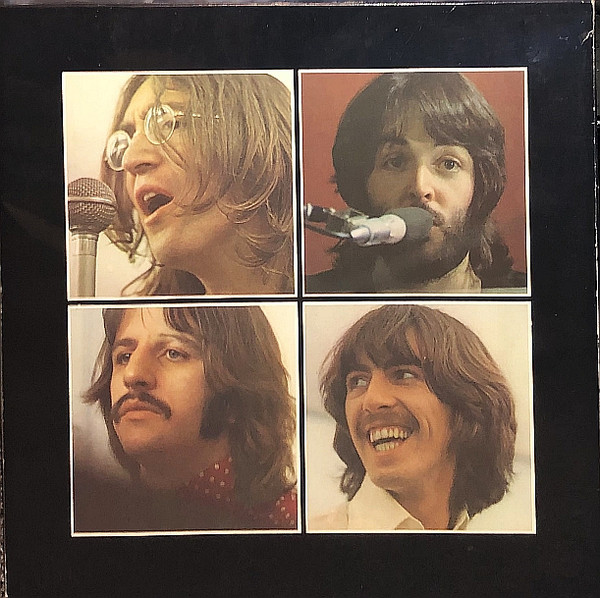
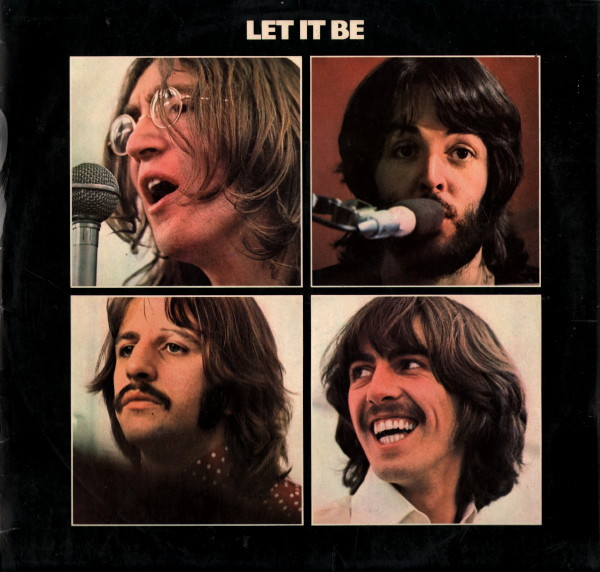
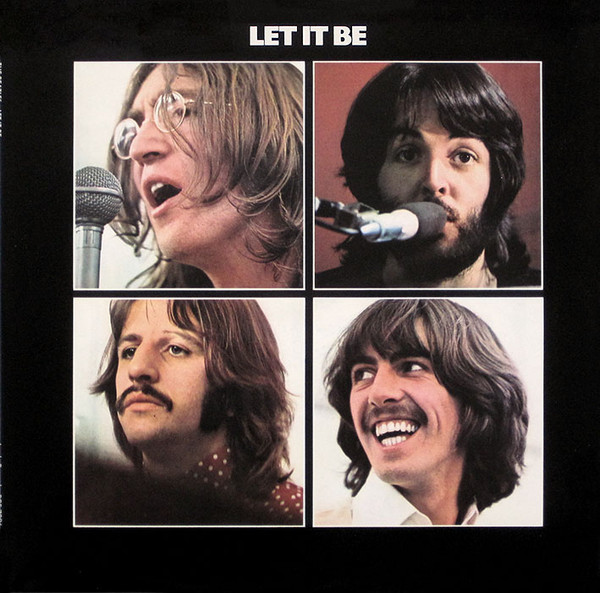
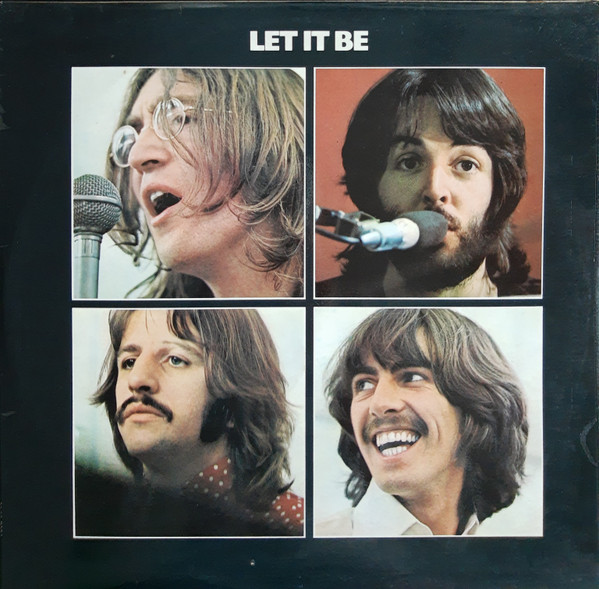
The first UK pressing appeared exclusively as a box set (catalogue number Apple PXS 1), containing the LP in its standard PCS 7096 sleeve alongside a 164-page paperback book titled The Beatles Get Back, featuring photographs by Ethan Russell and dialogue from the sessions. The premium packaging pushed the retail price roughly 33% above the standard album rate — a decision that affected advance orders and irritated McCartney further. The book’s binding was notoriously fragile; copies with all pages intact are themselves a minor prize today.
Within six months, production of the box set was discontinued. From November 1970 the album circulated as a straightforward LP, Apple PCS 7096, without the book.
The covers from the first pressing — both those inside the box and the initial batch sold separately without it — carry a red Apple logo on the reverse. Later covers switched to a green Apple logo. Red-apple copies are the ones collectors seek out. A minority of covers from various pressings also carry the Parlophone logo rather than Apple — the reason for this substitution and the exact quantities involved remain unclear.
Matrix Numbers — The Primary Identification Tool
For anyone trying to establish which pressing they have in their hands, the matrix numbers etched into the runout groove are the starting point. The first pressing of Let It Be has one and only one pair of matrix codes: YEX 773-2U (Side 1) and YEX 774-2U (Side 2). Despite what many listings on second-hand platforms claim, the combinations -2U/-3U or -3U/-2U are not part of the first pressing.
The second pressing runs to three matrix variants: YEX 773-3U / YEX 774-2U; YEX 773-2U / YEX 774-3U; and, introduced from early 1971, YEX 773-3U / YEX 774-3U. The third pressing (1971–1975) carries only the last of these combinations: YEX 773-3U on both sides.
When you have a copy with -3U / -3U on both sides, matrix numbers alone won’t settle the question of which pressing it is. The decisive indicator is the colour of the apple on Side 1 of the label: on the second pressing it is notably darker; on the third pressing, significantly lighter and more vivid.
One further detail worth noting on original first-pressing labels: the phonogram symbol (P) before 1970, printed to the right of the spindle hole, is noticeably smaller than on subsequent editions.
| Let It Be (Apple PCS 7096) — UK pressing identification guide | ||
| 8 May 1970 |
1st pressing YEX 773-2U / 774-2U |
One fixed matrix pair only: YEX 773-2U (Side 1) and YEX 774-2U (Side 2). Cover carries a red Apple logo on the reverse — present on both the PXS 1 box set (with the Get Back book) and the initial batch sold without the box. Dark green Apple label; small (P) symbol before 1970. The combinations -2U/-3U and -3U/-2U do not belong to this pressing, regardless of what second-hand listings claim. |
| 6 November 1970 – early 1971 |
2nd pressing 3 matrix variants |
Three matrix combinations: (A) YEX 773-3U / 774-2U, (B) YEX 773-2U / 774-3U, (C) from early 1971: YEX 773-3U / 774-3U. Cover carries a green Apple logo. Dark green Apple label, but the apple image is noticeably darker than on the third pressing — this is the key visual differentiator. Large (P) symbol before 1970. |
| 1971–1975 |
3rd pressing YEX 773-3U / 774-3U |
Single matrix combination throughout: YEX 773-3U / YEX 774-3U. Green Apple logo on cover. Light green Apple label — the apple image is clearly lighter and more vivid than on the second pressing. When both sides show -3U/-3U, the apple colour on the Side 1 label is the deciding factor. |