
 Vinyl Nostalgia
I have to admit: I was converted to jazz, all thanks to the tv show called „Bosch,” telling the captivating story of an LAPD homicide detective who fights for justice at all costs. A powerful character, often teetering on the edge of the law, yet deeply nostalgic and reflective, he reaches for jazz vinyls in the evenings. The series is based on a multi-volume novel by Michael Connelly, who himself listened to jazz while writing it.
– I am not sure what it is but there is a connection or correlation between jazz and writing. There is also a connection between jazz and the detective. Whenever I write a Harry Bosch novel I am usually listening to jazz. It inspires me. Maybe the improvisation of the music helps the improvisation of the writing. I don’t know why but it helps. It also helps me set the character of this detective. Invariably, the music I am listening to ends up in the books — usually on Harry Bosch’s CD player. I think the music he listens to says a lot about him.
– said author himself on this website.
The music in the Bosch show is excellent, but the real magic happens when you launch a Spotify playlist created for the books and listen to what appears on the pages of each novel. One fan put together a 12-hour playlist, featuring all the important songs from both the film and the novels.
– I can’t say I was [originally] following in [the tradition of] writing about characters and jazz musicians that I love. I was reading books about jazz musicians. And I was going to record stores into the jazz sections and trying to find stuff. But you can’t really do that. You can’t do that research and listen to the stuff and choose what to use without falling in love with it. So that’s what happened to me. I became my father in that regard. So Harry Bosch, his music initially wasn’t my music, but now it’s totally my music.
– said Michael Connolly during an interview for Jazz88.FM.

A special place among Harry Bosch’s favorite artists is occupied by Art Pepper, an alto saxophonist from the West Coast whose life was marked by drug addiction, a story of redemption, and music brimming with emotions. Pepper’s music perfectly suits Bosch, illustrating his own struggle with the darkness and brutality of the world. When Connolly’s character returns home at night, turns on the record player, and then sits in the dark drinking wine, the sounds emanating from his living room’s large speakers become a gateway to another world for Bosch.
– I wanted him to have some of those dimensions of the private eye, kind of feel like an outsider. And to me jazz is an outsider’s music, especially saxophones. It’s just, I think it’s innately a lonely sound and that would be what Harry Bosch is about, his lonely pursuit of truth, of understanding about himself – Michael Connolly
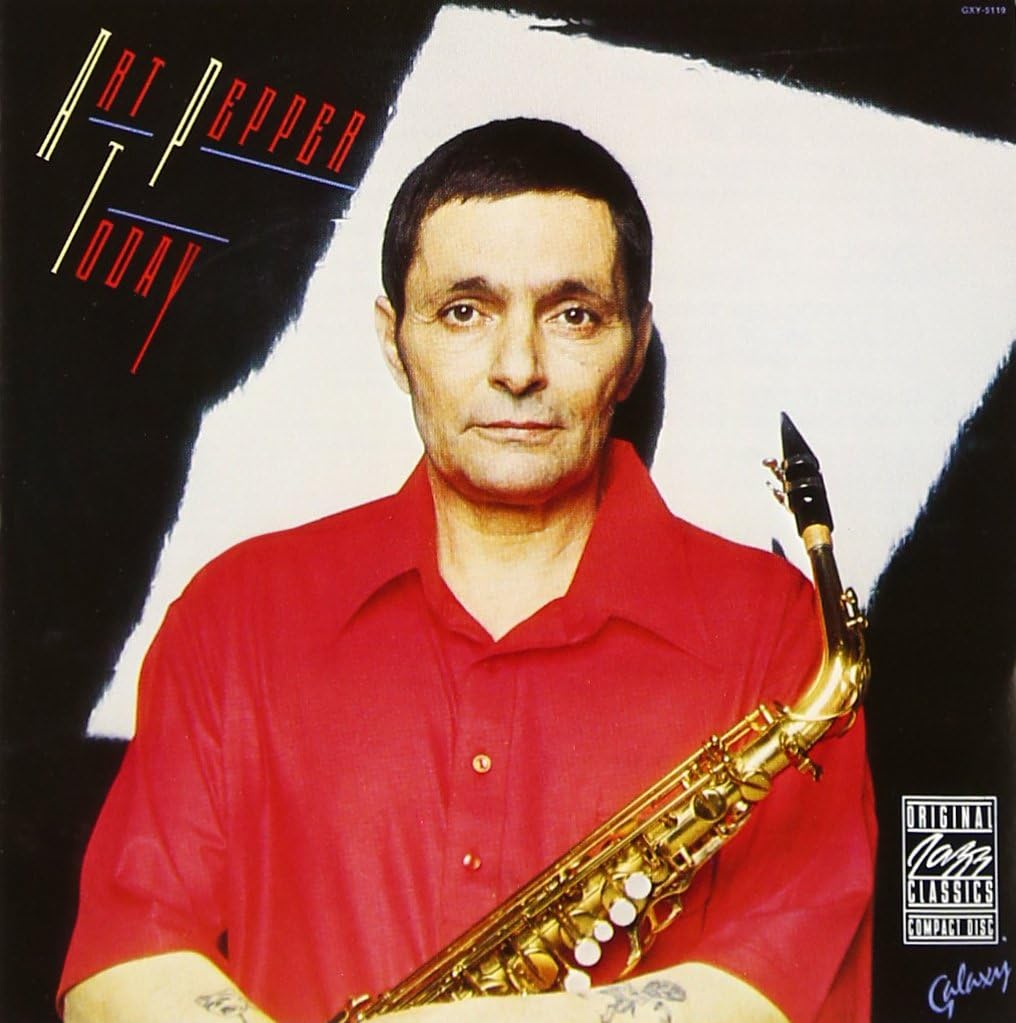
In an iconic scene from the series, when Harry Bosch talks to his daughter about jazz and promises to buy her a turntable and a few vinyl records (season 1, episode 10), Maddie Bosch (played by Madison Lintz) takes a few records off the shelf and flips through them. One of them is Art Pepper’s Today (Galaxy GXY-5119), from which the track “Patricia”—which sets the tone for the entire scene—is taken (see the table below the text for more details). This track, which lasts over 10 minutes, has an incredibly interesting history. “Patricia” first appeared on the album The Return of Art Pepper (Score SLP 4031) in 1957, but in a 4:38 version. In 2009, Jazz Workshop (JW-001) released an audiophile edition of this album on 180g vinyl in Spain, where “Patricia” lasts only 3:35. I personally own this album in the Spanish version.
The version from Today was reportedly created by accident when, during a break in a recording session at Fantasy Studios in Berkeley, pianist Stanley Cowell began playing this motif; the other musicians joined in, and a long blues-funk finale was improvised on the spot. A beautiful track that fits perfectly into any jazz playlist.
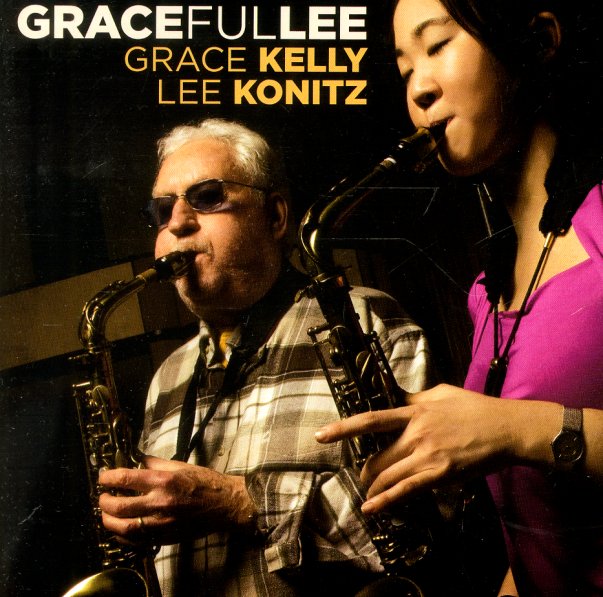
The second is the album GRACEfulLEE (PAZZ Productions, 2008), recorded in a single session in January 2008 by Grace Kelly and Lee Konitz, two alto saxophonists. When the musicians met to record a few tracks (they ended up recording the entire album), Kelly was 15 and Konitz was 80. Lee Konitz is a key figure in the history of jazz, though often underappreciated outside of expert circles. He played with Miles Davis on the album Birth of the Cool (1949–1950), collaborated with Lennie Tristano, and spent decades developing an alternative approach to jazz improvisation. The very young Kelly already had three other albums to her credit, and on these recordings she was accompanied by a lineup that many experienced musicians would not have dared to enter the studio with.
The catch is that this material was released exclusively on CD, and there was never a vinyl edition. In the scene from the show, Maddie is clearly holding a vinyl copy of GRACEfulLEE, which could mean that the cover was specially printed on a cardboard sleeve in album format to serve as a prop deliberately placed there. And here we come to an unexpected twist. Although no track from this album appears in the Bosch series (nor in the sequel Bosch Legacy), in the second episode of Season 2, Grace Kelly appears in person in a scene filmed at the Catalina Jazz Club in Hollywood and performs the song “Blues For Harry Bosch” live. The song was commissioned by the show’s producers, and this fact was reported in the press.
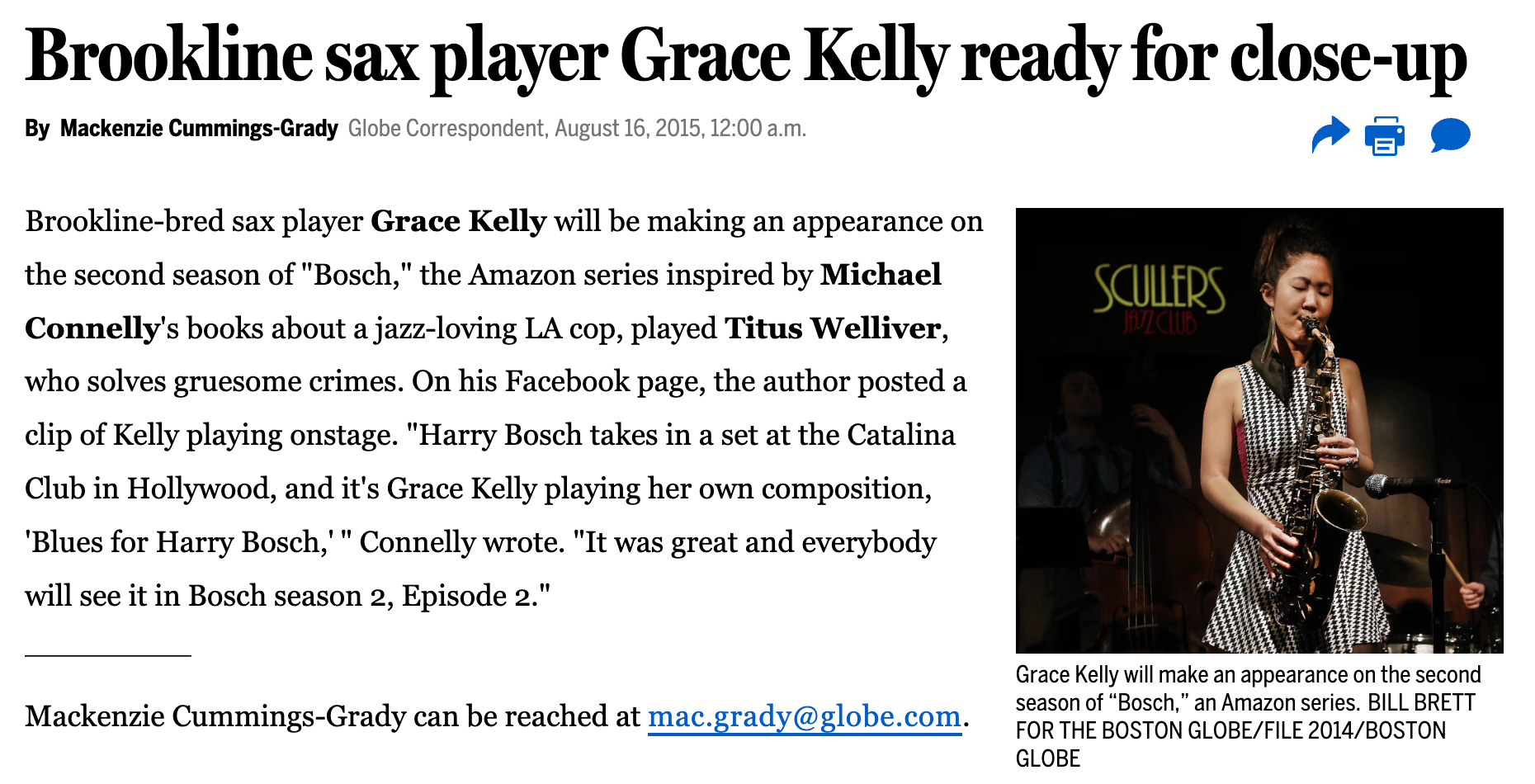
The track “Blues For Harry Bosch” appeared on Kelly’s tenth album, Trying to Figure It Out, released in February 2016. And returning for a moment to GraceFulLee, it’s worth mentioning that while the album is highly regarded in jazz circles, it’s widely available on the market and doesn’t really hold the status of a collector’s item. Unless, of course, you’re a fan of Harry Bosch (played brilliantly by Titus Welliver) in either the film or book versions.
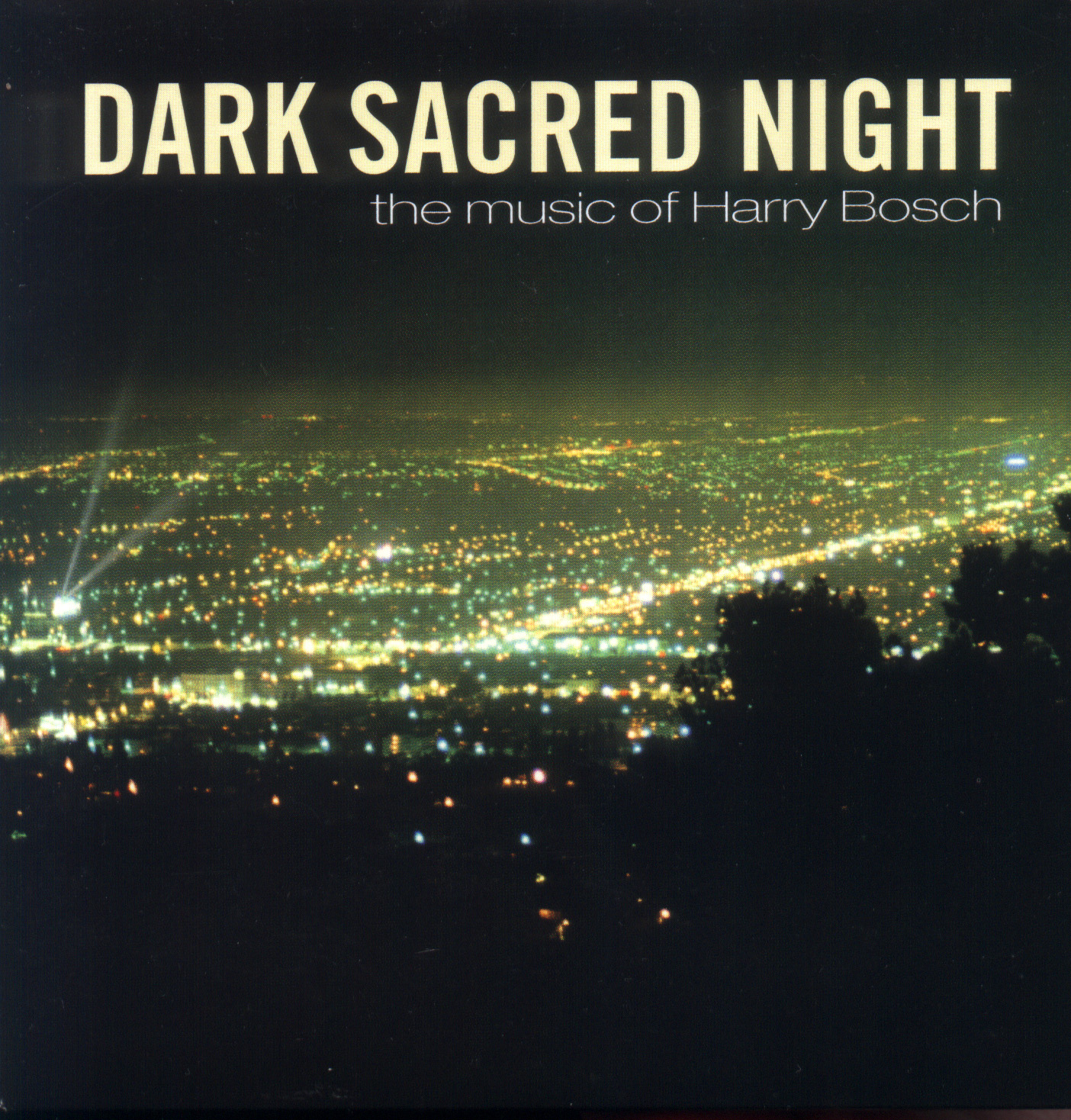
In 2003, a special limited edition jazz CD, Dark Sacred Night: The Music of Harry Bosch, was produced (unfortunately, it was never released on vinyl). The CD was distributed during the tour promoting Michael Connolly’s book „Lost Light,” is no longer available and has never been sold separately.
This CD has its own page on Amazon, and occasionally, though extremely rarely, used copies appear for sale there. At the time of writing, the CD was also not available on eBay.
Below is a list of the 10 most important jazz classic tunes from the Harry Bosch soundtrack – my subjective point of view.
| Track / artist | Album / year | Scene / context | Backstory |
|---|---|---|---|
|
“Lullaby”
Frank Morgan
anthem |
1989 Mood Indigo Antilles / Island |
A recurring motif both in the novels (it shows up as early as The Black Ice, 1993) and in the series. Connelly himself has called it “Harry Bosch’s anthem”. | A minute-long duet between piano (George Cables) and alto saxophone, written by Cables. Connelly played it every day before writing each of his Bosch novels — he has described it as “raising the flag before work”. |
|
“Patricia”
Art Pepper
signature scene |
1978 Today Galaxy Records |
In Season 1’s “Us and Them”, Harry plays this album for his daughter Maddie and introduces Pepper with “the late, great Art Pepper”. In Season 6, Maddie herself takes Today off the shelf at The Record Parlour and explains its meaning to her boyfriend. | “Patricia” was written for Pepper’s estranged daughter — a child from his first marriage whom he barely saw during his years of heroin addiction. The famous 1981 Croydon recording (later released as Unreleased Art Vol. 3 — Croydon) is a particular Bosch favourite and features explicitly in The Black Box. |
|
“Mood Indigo”
Frank Morgan
mono |
1989 Mood Indigo Antilles / Island |
Appears in both The Black Box and Two Kinds of Truth. In the 2017 novel, Bosch puts it on by page 53 — as Doug Moe noted, “a quick signal that this is still the same Harry”. | A 1930 Duke Ellington composition reworked by Morgan into a dark, affirmative statement — with Wynton Marsalis on trumpet and Ronnie Mathews on piano. Gary Giddins, in his liner notes for the Bosch compilation Dark Sacred Night: The Music of Harry Bosch, wrote that “no one else makes the alto cry like that”. |
|
“Straight Life”
Art Pepper
stereo |
1957 Art Pepper Meets the Rhythm Section Contemporary Records |
In A Darkness More Than Night, Bosch and Terry McCaleb listen to this — “Pepper’s signature composition” — and trade lines about genius and the “fatal flaw” of addiction. | The rhythm section of the title is Miles Davis’s band: Red Garland (piano), Paul Chambers (bass), Philly Joe Jones (drums). The tune is built on the chord changes to “After You’ve Gone”. Pepper also wrote a 1979 autobiography of the same name — one of the most candid books ever written by a jazz musician. |
|
“Soul Eyes”
John Coltrane
mono |
1962 Coltrane (Impulse!) cited from the compilation The Gentle Side of John Coltrane |
Appears in The Black Echo (the very first Bosch novel, 1992) and again in Lost Light. One of those tracks Bosch reaches for “on headphones, after hours, when no one is watching”. | A composition by pianist Mal Waldron. Coltrane recorded it with his legendary quartet: McCoy Tyner (piano), Jimmy Garrison (bass), Elvin Jones (drums). A ballad in C minor with a melancholy signature phrase — tailor-made for Bosch’s nostalgic, solitary register. |
|
“My Funny Valentine”
Chet Baker
vocal + sax |
1954 Chet Baker Sings Pacific Jazz |
In Lost Light, Bosch listens to Baker’s reading alongside Art Pepper’s. The theme of unrequited love runs throughout the series and maps neatly onto Bosch’s own emotional life. | A Rodgers & Hart song from the 1937 musical Babes in Arms. Baker recorded two versions — vocal and instrumental — both in 1954 at Pacific Jazz Studio. Connelly also cites Pepper’s take from his album Art Standards. |
|
“Helen’s Song”
George Cables
stereo |
2007 You Don’t Know Me: The Music of Jimmy Rowles HighNote |
Appears in The Black Box (2012). Cables — Morgan’s long-time collaborator and the composer of “Lullaby” — is the “other pianist” in the Bosch universe. | Written by Cables for his late wife Helen Wray. A melancholy solo piano ballad. There’s a quiet resonance here for Connelly readers: music written for loved ones who are gone is a theme that returns for Bosch after Eleanor’s death in Season 4. |
|
“For All We Know”
Sonny Rollins
mono |
1990 Falling in Love with Jazz Milestone Records |
Featured in The Black Echo and The Closers. Connelly treats Rollins as a gold standard — calling him “the greatest living jazz master” in the liner notes to Dark Sacred Night. | A 1934 ballad by Sam M. Lewis and J. Fred Coots, originally popularised by Billie Holiday. Rollins’s reading — with Branford Marsalis and Tommy Flanagan in support — is the tenor saxophone in its most restrained, contemplative register. |
|
“Lush Life”
Joe Henderson
stereo |
1992 Lush Life: The Music of Billy Strayhorn Verve |
Appears in The Concrete Blonde and Lost Light. One of the tracks Bosch associates with nights at his Hollywood Hills house. | Billy Strayhorn wrote “Lush Life” as a teenager (roughly 1933-36), but it only entered the standard canon after John Coltrane’s 1963 recording. Henderson cut his version in a bare trio with Christian McBride and Gregory Hutchinson — no full rhythm section, minimal instrumentation. Strayhorn was Duke Ellington’s closest musical collaborator. |
|
“What a Wonderful World”
Louis Armstrong
mono |
1967 single, What a Wonderful World ABC Records |
Cited repeatedly — in The Last Coyote, Lost Light, and The Overlook. For Bosch, it’s the counterweight: a song of affirmation played against the grain of a detective who sees the worst of humanity every day. | Armstrong cut it at 66, two years before his death. The single flopped in the U.S. (ABC barely promoted it) but spent four weeks at number one in the UK in 1968. A rare outing for Armstrong in purely lyrical mode — understated vocal, orchestral bed, no showmanship. |
|
“Soul of Things”
Tomasz Stańko
European jazz |
2002 Soul of Things ECM Records |
Cited in Nine Dragons (2009). Stańko alongside Carter and Marsalis signals that Bosch’s taste has started reaching past the West Coast canon. | Recorded with three Polish players — Marcin Wasilewski, Sławomir Kurkiewicz, Michał Miśkiewicz, then billed as Simple Acoustic Trio and all still in their early twenties. The album helped mark the arrival of the Polish jazz school on the international stage; a rare moment when Bosch listens to something European rather than American. |
|
“Seven Steps to Heaven”
Ron Carter
Bosch: Legacy |
2006 Dear Miles Blue Note |
In Bosch: Legacy, Maddie brings her father a box of LPs inherited from her mother, Carter among them. Connelly cites this specific track in The Burning Room. | Carter is the most-recorded bassist in jazz history — over 2,200 albums to his name. Dear Miles is his tribute to Miles Davis, whose mid-’60s quintet he anchored. “Seven Steps to Heaven” was originally cut by Davis in 1963; here it’s reworked by a 67-year-old Carter looking back at his younger self. |
Share Your Opinion