
 Vinyl Nostalgia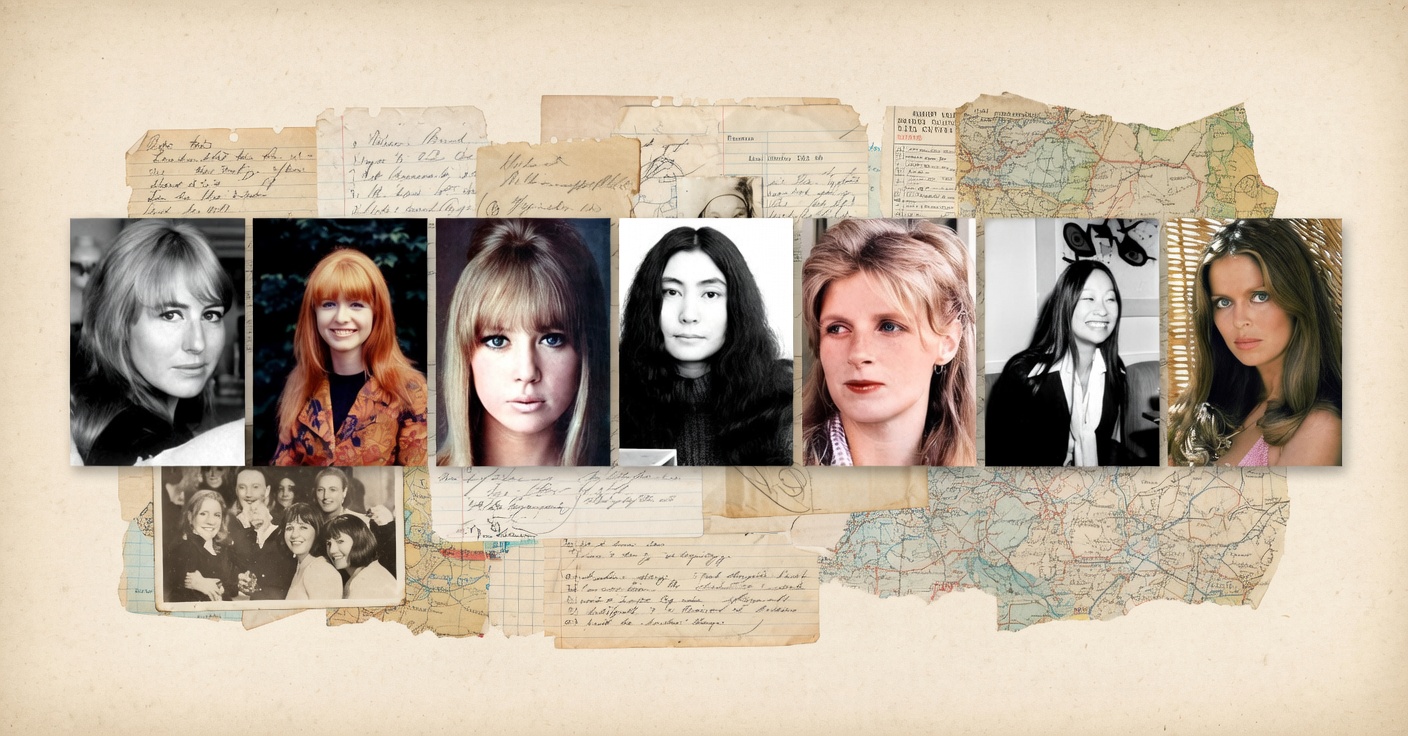
A great many Beatles tracks read like pages torn from a private diary. When Paul McCartney’s relationship with Jane Asher began to fracture under the strain of her theatre tours, he channelled the frustration into You Won’t See Me and I’m Looking Through You. When John Lennon was fighting for the world to accept Yoko Ono, he wrote the desperate, pleading Don’t Let Me Down. The women who loved, inspired and sometimes infuriated the Fab Four left indelible marks not just on their personal lives but on some of the most celebrated recordings in popular music. This is their story.
Cynthia Powell: Miss Prim and the Rebel
Cynthia Powell and John Lennon first crossed paths in the autumn of 1957 at a lettering class in Liverpool College of Art, though their relationship proper didn’t begin until the summer of 1958. They were a study in opposites. Cynthia was a diligent, well-mannered student from Hoylake on the Wirral Peninsula — Lennon himself nicknamed her „Miss Prim” — while he cultivated the persona of a rebellious Teddy Boy with a troubled past. Lennon hadn’t chosen the lettering course voluntarily; every other lecturer at the college had refused to teach him.
On the surface they appeared to come from different worlds, though in reality both had grown up in reasonably comfortable suburban households. The attraction was immediate and fierce. Cynthia bleached her hair blonde after hearing that John was besotted with a fellow student who resembled Brigitte Bardot. When he saw the result, he called out: „Get you, Miss Hoylake!” For his part, Lennon found in Cynthia a semblance of the stable home life he’d never had — abandoned by his father, raised by his Aunt Mimi following his mother Julia’s death in a road accident.
It should be said plainly that Lennon was not an easy partner. In later interviews he was candid about his violence towards women, stating bluntly: „I was a hitter.” In her memoirs, Cynthia described how John struck her after seeing her dance with Stuart Sutcliffe, which led to a three-month separation. The pattern — explosive jealousy, remorse, reconciliation — persisted throughout their time together.
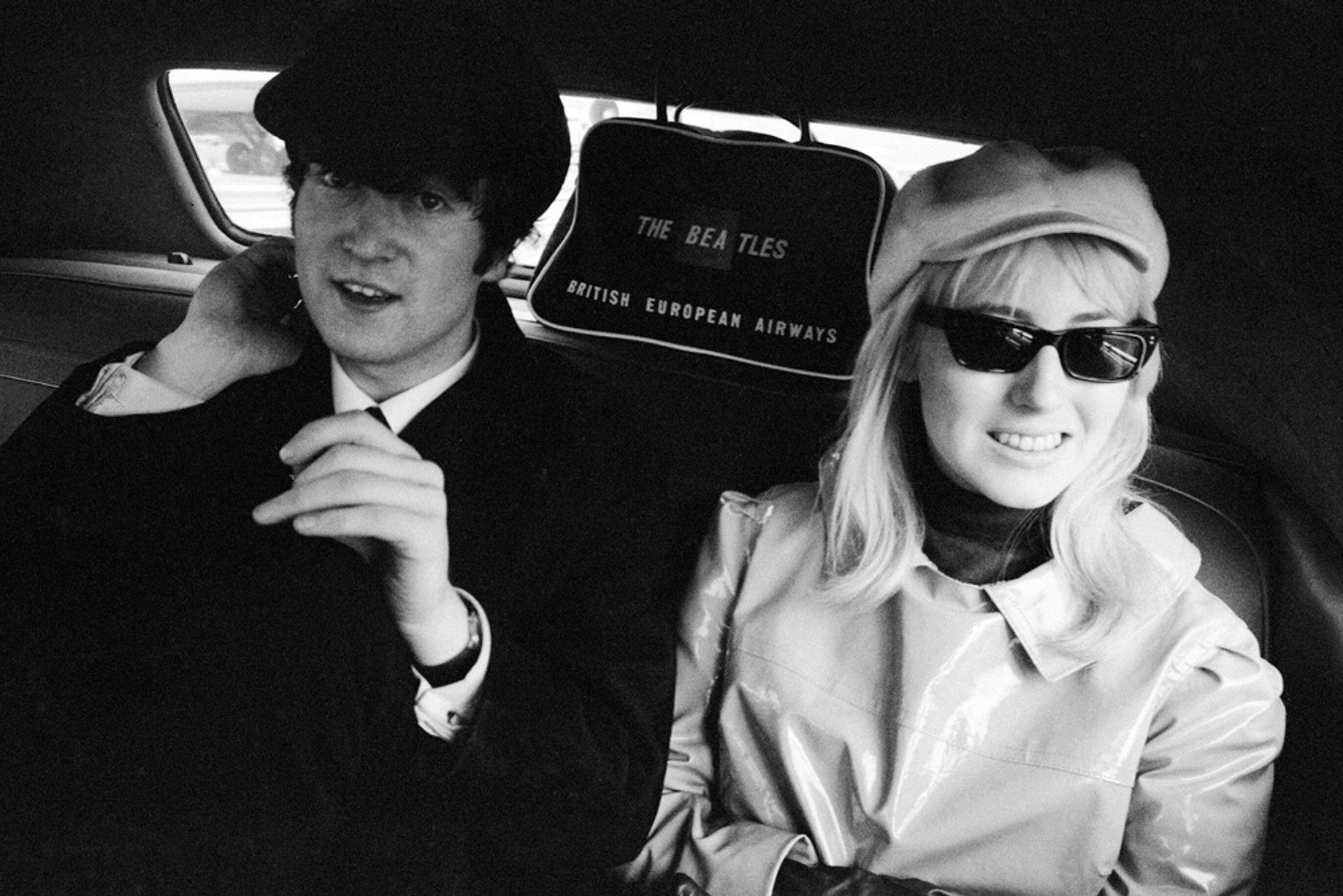
Everything changed in mid-1962 when Cynthia discovered she was pregnant. As she later admitted, the couple had never used contraception and simply hadn’t considered the possibility. Lennon’s response was characteristically blunt: „There’s only one thing for it, Cyn — we’ll have to get married.”
The ceremony took place on 23 August 1962 at the Mount Pleasant register office in Liverpool, and it bordered on farce. The moment the registrar began the proceedings, a workman outside fired up a pneumatic drill that drowned out every word. When the groom was asked to step forward, George Harrison obliged instead, adding to the confusion. Brian Epstein served as best man, with McCartney and Harrison in attendance. Not a single member of John’s family was present — not because of vague „family tensions,” but because Aunt Mimi, furious at the news of the marriage, had actively blocked the rest of the Lennon clan from attending. Cynthia’s brother Tony and his wife dropped in briefly during their lunch break. The modest wedding breakfast was held at Reece’s restaurant in Clayton Square, paid for by Epstein — the same establishment where John’s parents had celebrated their own ill-fated union years earlier.
Epstein’s verdict was ruthless: the marriage and the baby were to remain an absolute secret. When the story once leaked to the press, the band flatly denied it. Julian Lennon was born on 8 April 1963, and John didn’t see his son until three days later — he was on tour. After a brief visit to the hospital, he informed Cynthia that he was leaving for a four-day holiday in Barcelona. With Epstein.
When the secret finally became public, the family relocated to the handsome Kenwood estate in Weybridge, Surrey. But material comfort brought no peace. By the mid-sixties Lennon had plunged deep into LSD — which Cynthia regarded as the beginning of the end — immersing himself in spiritual seeking and surrounding himself with figures from London’s avant-garde. Cynthia, firmly grounded and unwilling to participate in her husband’s drug sessions, became increasingly invisible to him. As she later recalled: „John was there, but he wasn’t there. I’d talk to him and he simply couldn’t hear me.”
The breaking point arrived in the spring of 1968. Returning early from a holiday in Greece, Cynthia walked into her own home to find John sitting on the floor with Yoko Ono, both wearing bathrobes. The scene effectively ended the marriage. Lennon, entirely consumed by his new relationship, treated his first wife with remarkable coldness. He initially offered her seventy-five thousand pounds, remarking: „That’s like winning the pools, so what are you moaning about? You’re not worth any more.” The final settlement came to one hundred thousand.
During those bleak weeks, it was Paul McCartney who offered the greatest kindness. One June day in 1968, Paul climbed into his Aston Martin and drove to Kenwood to visit Cynthia and five-year-old Julian. During the hour-long journey from London he worked out a melody and some opening words — originally titled Hey Jules. He changed the name to „Jude” because it sat better rhythmically. Cynthia remembered: „I’ll never forget Paul’s gesture of care in coming to see us. He composed Hey Jude in the car on the way.”
For the rest of her life Cynthia bore the weight of being „the first wife,” but over the years she found her own voice. Her searingly honest memoir John (2005) told her side of the story with grace and dignity. She died of cancer on 1 April 2015 at her home in Mallorca.
Pattie Boyd: Muse to Two Guitars
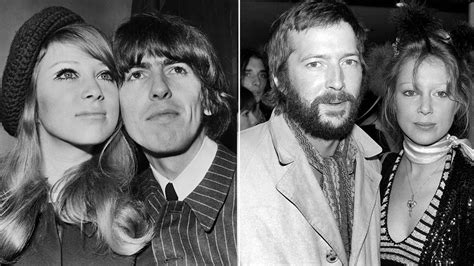
If one woman embodied Swinging London, it was Pattie Boyd. She met George Harrison on 2 March 1964 on the set of A Hard Day’s Night. The nineteen-year-old model had been cast as a teenage Beatles fan, and found herself in a railway carriage alongside the four musicians. George, smitten, joked at the end of the day’s shoot: „Will you marry me?” When Pattie laughed it off, he added: „Well, how about dinner then?” She declined — she was seeing photographer Eric Swayne at the time.
A few days later, having split from Swayne, she returned to the set and accepted George’s invitation. Their first date was at the exclusive Garrick Club in Covent Garden, chaperoned by Brian Epstein. „I didn’t mind Brian being there,” Pattie later recalled. „If it had been just the two of us, two very shy young people, it would have been too intense.” They married on 21 January 1966 and became the golden couple of Swinging London. But the marriage began to crack in the early seventies as George retreated further into Eastern spirituality and the emotional distance between them grew.
And then there comes Eric Clapton, Harrison’s closest friend. Clapton had become obsessively infatuated with Pattie, dedicating an entire album — Layla and Other Assorted Love Songs (1970) — to her, inspired by the medieval Persian tale of Layla and Majnun, a man driven to madness by unrequited love. When his direct appeals failed, Clapton briefly dated Pattie’s sister Paula in an attempt to quell the obsession. Eventually Pattie left George and married Eric in 1979, though that union also ended in divorce in 1989 due to his infidelity.
Theirs remains one of rock’s most singular triangles: Eric „stole” his best friend’s wife, yet the two men stayed close, referring to each other as „husbands-in-law.” Pattie was arguably the most influential muse in rock history, inspiring George’s Something, I Need You and For You Blue, and Clapton’s Layla, Bell Bottom Blues and Wonderful Tonight.
The story behind Something — which Frank Sinatra called „the greatest love song of the last fifty years” — is more complicated than the standard telling suggests. In her autobiography Wonderful Today (2007), Pattie Boyd wrote that George told her directly he had written the song for her. Yet Harrison himself gave contradictory answers over the decades. In a 1969 interview he responded evasively: „Maybe Pattie, probably.” In 1996 he said that while writing the track he’d been thinking about Ray Charles — imagining how the soul singer might deliver the melody. In conversation with Joshua Greene he revealed that the inspiration had been Hare Krishna. The truth is most likely that Something grew from a confluence of all these sources — love for Pattie, spiritual devotion, admiration for fellow artists — and it is precisely this layering that makes it so universally affecting.
Yoko Ono and May Pang: The Avant-Garde and the Lost Weekend
In 1966, John Lennon visited the Indica Gallery in London and encountered Japanese avant-garde artist Yoko Ono. The meeting changed everything. Yoko was not merely a romantic partner; she was an intellectual collaborator who pulled Lennon out of the framework of the band and opened up the world of conceptual art, happenings and political activism. For decades fans blamed her for breaking up The Beatles — a narrative that recent scholarship and Peter Jackson’s monumental 2021 documentary Get Back have substantially revised. The group was fracturing from within under the pressure of artistic and business disagreements; Yoko was a catalyst for change rather than its cause.
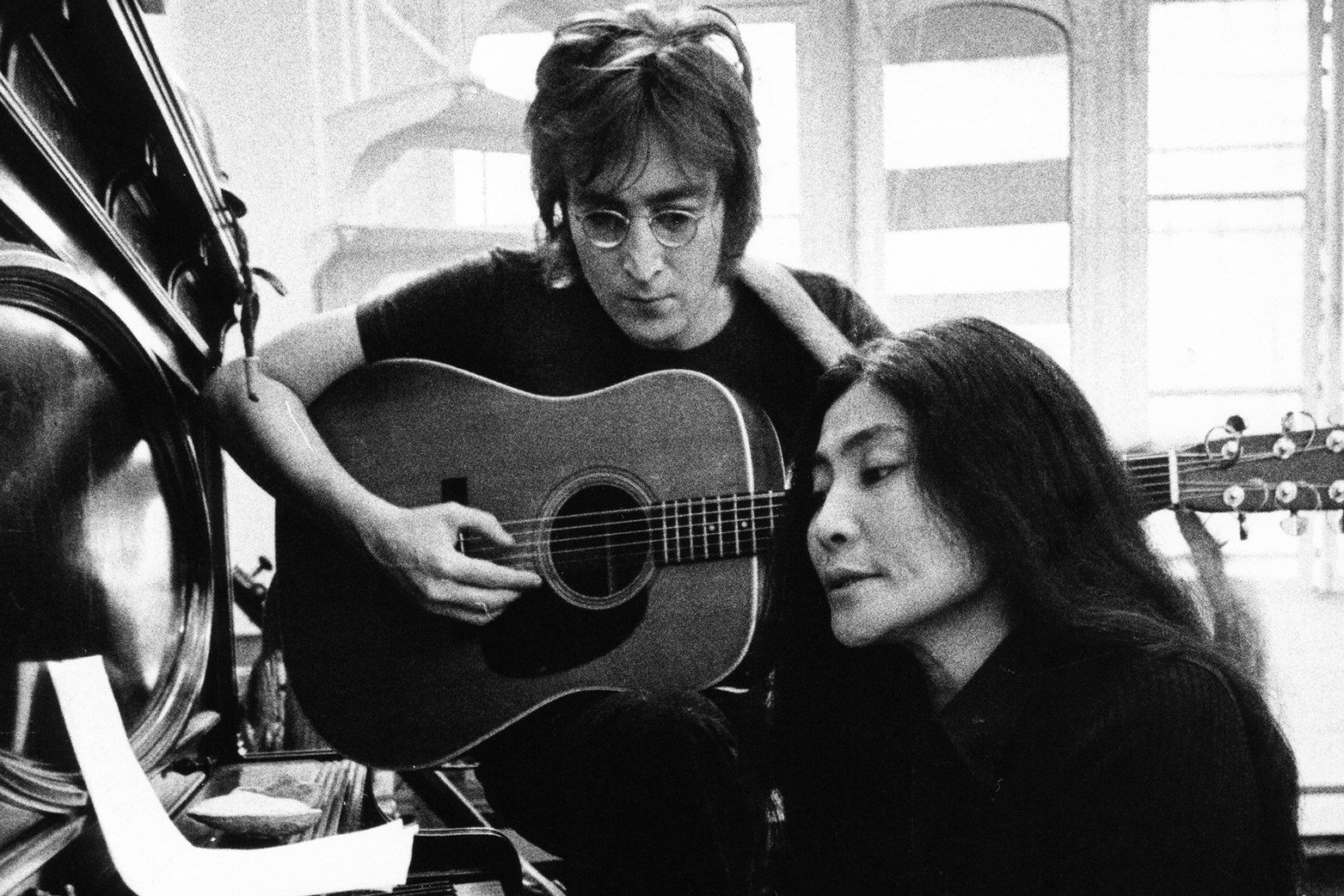
Less well known but equally fascinating is Lennon’s relationship with May Pang. In 1973, with the Lennon marriage in deep crisis, it was Yoko herself who suggested to their twenty-three-year-old personal assistant that she should „take care of” John. May, initially stunned by the proposition, eventually agreed.
The period that followed — eighteen months that Lennon dubbed the „Lost Weekend” — was paradoxically one of his most musically productive. He recorded Walls and Bridges (1974), which yielded his only solo number one in the US, Whatever Gets You Thru the Night. May also helped him reconnect with his son Julian, facilitating a restoration of the paternal bond Lennon had neglected for years. He is believed to have written Surprise, Surprise (Sweet Bird of Paradox) from the same album for May. She also took credit for „humanising” John — it was in her company that he began wearing the glasses he had previously hidden out of vanity.
In early 1975 Lennon returned to Yoko, with whom he remained until his murder on 8 December 1980. The official narrative speaks of an inseparable couple devoted to raising their son Sean. May Pang, in her book Loving John and in subsequent interviews, painted a different picture — claiming she remained in contact with John almost to the end and that their final phone conversation took place just days before his death. It should be noted that these claims originate solely from May Pang and have not been independently corroborated. Yoko Ono has never publicly addressed them.
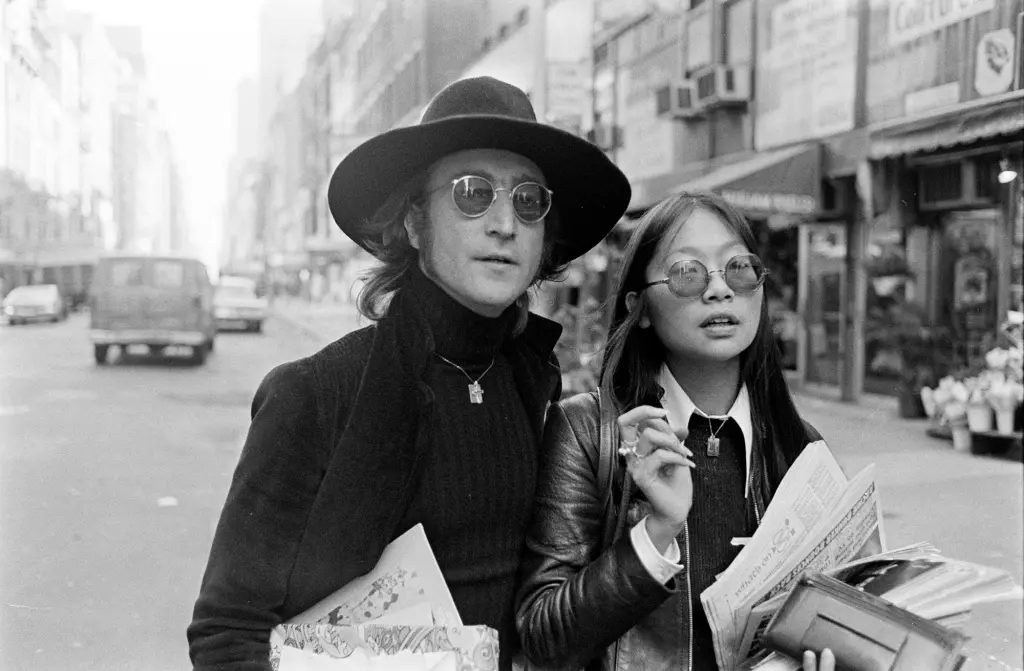
Regardless of how one assesses the reliability of these recollections, the May Pa
ng chapter is essential for understanding Lennon — not as an icon, but as a man torn between his fascination with Yoko and a yearning for simplicity and calm.Jane Asher: The Theatrical Muse of Wimpole Street
Paul McCartney and Jane Asher met on 18 April 1963, when the seventeen-year-old actress was invited by Radio Times magazine to document the phenomenon of Beatlemania at a concert in the Royal Albert Hall. Contrary to what is sometimes written, Asher was not a journalist sent to conduct an interview — she was already a well-known young actress (a panellist on the BBC’s Juke Box Jury, among other credits) who had been asked to pose for a photo session alongside the band and share her impressions. Her reaction to the music: „Now these I could scream for.”
McCartney was instantly taken with the red-haired Londoner. As he remembered years later: „We thought she was blonde because we’d only seen her on black-and-white television. And then it turned out she was a redhead! Wow!” Their relationship quickly became one of the most iconic romances of the Swinging Sixties.
Soon after they began seeing each other, Paul moved into the Asher family home at 57 Wimpole Street — first sleeping in the drawing room, then in a small attic room next door to Jane’s brother Peter (later one half of the duo Peter and Gordon). The move had an enormous impact on his personal and musical development. The Asher household — Jane’s father Dr Richard Asher was an eminent physician specialising in blood diseases and psychiatric disorders, while her mother Margaret was a professor of oboe at the Guildhall School of Music and Drama (where George Martin, the Beatles’ future producer, had studied) — opened the door to classical music, avant-garde theatre and fine art. It was in that culturally vibrant home that McCartney composed some of his greatest work, including the immortal Yesterday.
„It was the first ballad I’d impressed myself with. It’s got nice chords: 'Bright are the stars that shine, dark is the sky…’ I like the imagery of stars and sky. It was really a love song. I wrote it in the Ashers’ living room.” — Paul McCartney on And I Love Her (source: Barry Miles, Many Years From Now)
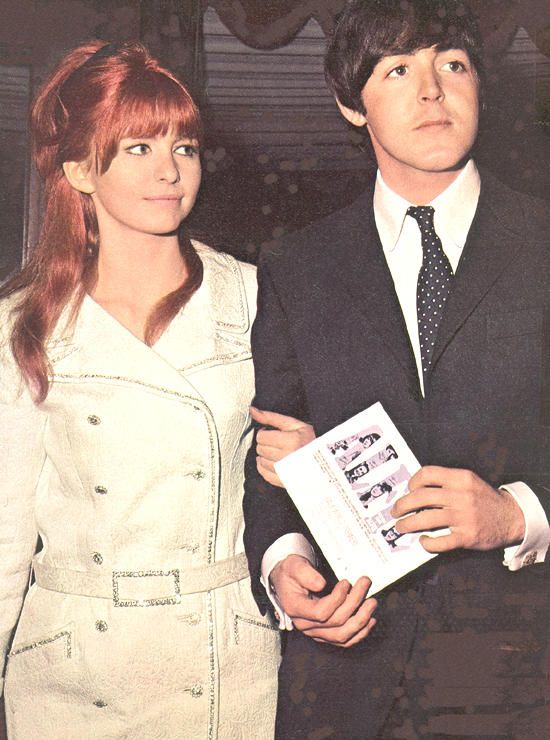
Jane became Paul’s most important muse during the peak Beatlemania years, inspiring a series of compositions that tracked the arc of their relationship: And I Love Her, We Can Work It Out, You Won’t See Me, I’m Looking Through You, Things We Said Today and For No One. The relationship was not without tension. Asher was a fiercely independent and ambitious theatre actress who flatly refused to abandon her career to become merely a „Beatle’s girlfriend.” McCartney, for all his open-mindedness, deep down expected a more traditional partner — one who would always be waiting for him at home.
The five-year relationship ended dramatically in the summer of 1968. Jane, returning earlier than planned from theatre performances in Bristol, found Paul in bed with Francie Schwartz, an American screenwriter working in the Apple press office. Shortly afterwards — on 20 July 1968 — Asher appeared on the BBC television programme Dee Time and calmly told host Simon Dee: „I haven’t broken it off, but it is broken off.” McCartney learned of the announcement from the television — he was watching another programme at his father’s house when someone informed him. For the rest of her life Jane Asher consistently refused to comment publicly on the relationship, making her unique among Beatles partners.
Linda Eastman: A Breath of Fresh Air
Linda Eastman and Paul McCartney first met on 15 May 1967 at the Bag O’Nails club in London during a Georgie Fame concert. Linda, a gifted American photographer already known in music circles for her portraits of major rock acts — Jimi Hendrix, The Doors, The Rolling Stones — had come to Britain on a photographic assignment. They met again four days later at the launch party for Sgt. Pepper’s Lonely Hearts Club Band. For Paul — entering a crisis point in his relationship with Jane Asher and exhausted by the pressures surrounding The Beatles — the relaxed, natural and deeply warm American was a breath of fresh air.
The couple married on 12 March 1969 at the Marylebone register office in London, literally breaking the hearts of thousands of fans — crowds of weeping girls gathered outside. The early months of their marriage coincided with one of the darkest periods of McCartney’s life: the bitter, conflict-ridden dissolution of The Beatles. It was Linda who became his most important anchor as he battled deep depression, turned to drink and retreated to a farm in Scotland. She helped him recover his self-belief and encouraged him to start recording solo material. Paul dedicated one of his finest solo compositions to her — Maybe I’m Amazed.
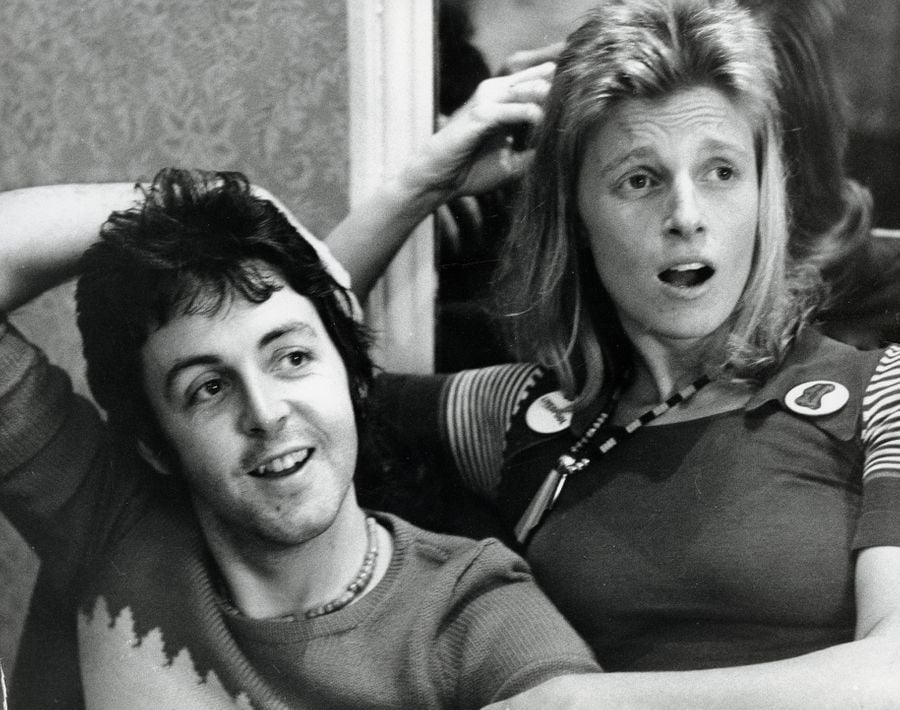
In the seventies their bond extended directly onto the stage. McCartney persuaded Linda to learn keyboards and join his new band Wings. Though she initially drew fierce criticism from the music press and fans who mercilessly highlighted her lack of professional training, Linda weathered the onslaught with dignity and in time became an integral part of the group’s sound.
The McCartneys’ marriage went down in history as one of rock’s most enduring partnerships. They raised four children together (including Heather from Linda’s previous marriage), became pioneers of vegetarianism and passionate advocates for animal rights. Paul and Linda often proudly stated that in almost thirty years together they spent only ten nights apart — and only because Paul was arrested in Tokyo in 1980 for marijuana possession. Their extraordinary love story was ended only by Linda’s premature death from breast cancer in 1998.
Barbara Bach: Bond Girl, Drummer’s Wife
Barbara Bach (born Barbara Goldbach) was already an international star before she ever met Ringo Starr. The American model and actress had achieved global fame in 1977 playing Major Anya Amasova — one of the most iconic Bond girls — in The Spy Who Loved Me opposite Roger Moore. Their paths didn’t cross until 1980, on the set of the screwball comedy Caveman in Mexico. Barbara later recalled: „Suddenly, two weeks before the end of filming, we fell in love. We went from being friends to being in love.”
The initial attraction deepened through a dramatic incident. On 19 May 1980, driving to a party in Surrey, the couple ran into dense fog. At the treacherous Robin Hood roundabout on the A3, travelling at close to sixty miles an hour, Ringo swerved to avoid an oncoming lorry. The white Mercedes skidded, rolled for fifty metres and smashed head-on into lamp posts. Despite an injured leg, Ringo pulled Barbara from the wreck, then — in a move quintessentially rock and roll — went back to the crushed car for his cigarettes. Both escaped with minor injuries. Three weeks later Barbara told her father she intended to marry Ringo.
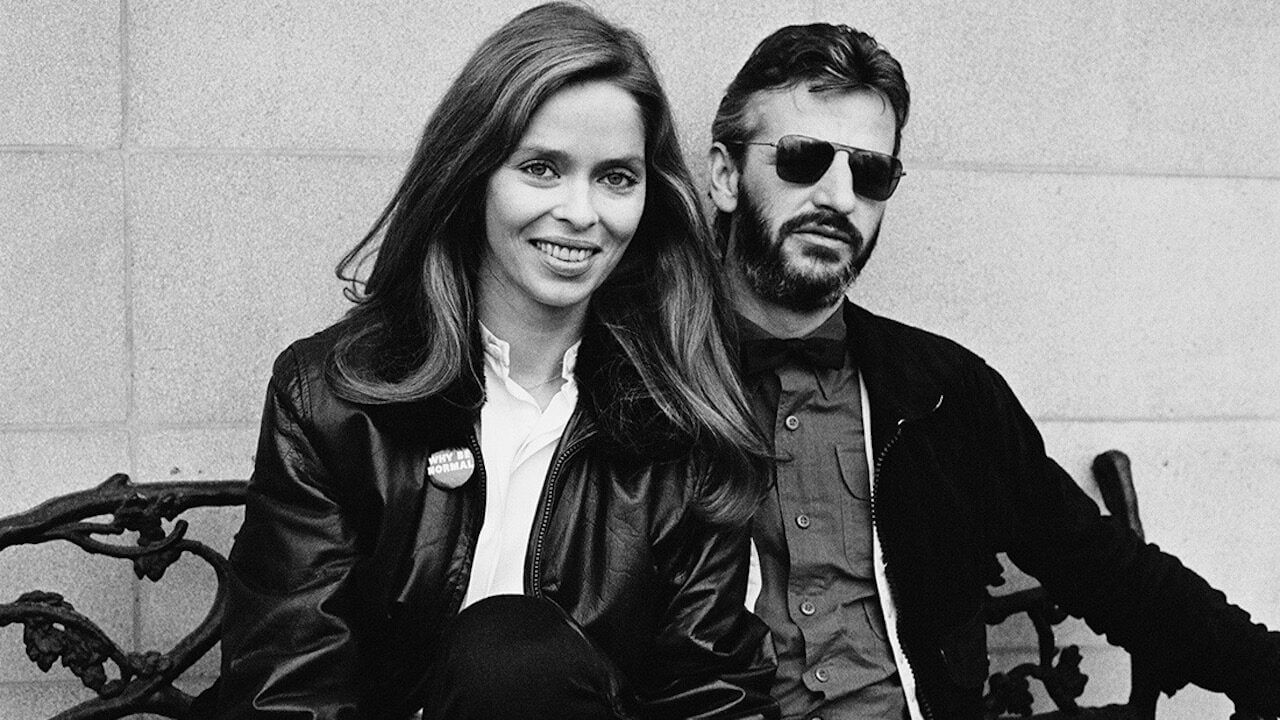
The wedding took place on 27 April 1981 at the same Marylebone register office where Paul and Linda McCartney had married. Paul and George Harrison both attended — a particularly moving occasion, coming barely five months after John Lennon’s murder.
Their marriage, though rooted in deep affection, went through an exceptionally dark period in the eighties. Both struggled with severe alcohol and drug addiction. Ringo later admitted that one morning he woke up to learn from household staff that he had wrecked the house so badly they assumed burglars had broken in, and had assaulted Barbara so seriously they feared she was dead. In 1988, after a series of drastic incidents, the couple made a joint decision to enter rehabilitation at a clinic in Tucson, Arizona. The shared fight for sobriety saved their relationship. Both have remained clean since.
Today, Ringo Starr and Barbara Bach are one of rock and roll’s longest-lasting couples — together for over four decades. They jointly run The Lotus Foundation, a charity supporting addiction recovery and animal welfare.
Behind the Spotlight: Maureen Cox and Olivia Harrison
Less tends to be written about Maureen Cox, Ringo Starr’s first wife. A hairdresser from Liverpool and a devoted Beatles fan from the Cavern Club days (she kissed Paul before she got to Ringo), Maureen stood by him through the madness of Beatlemania. While John, Paul and George were classic troubadours who poured their relationships into song, Ringo kept his family life separate from his creative work. He never wrote a song for Maureen. Paul McCartney did it for him.
Maureen died of leukaemia on 30 December 1994. Ringo was at her bedside in the final hours. Paul, who had visited her in hospital, upon hearing the news immediately shut himself in a room and wrote a gentle ballad — Little Willow — not as an elegy but as a consolation for the three grown children of Maureen and Ringo: Zak, Jason and Lee. The song appeared on the album Flaming Pie in 1997. McCartney later explained: „Rather than write a letter to the children, I wrote a song. I didn’t call it 'Maureen’ — I called it 'Little Willow,’ because I prefer to wrap the emotion in a metaphor. That way the song becomes available to everyone. We’ve all got our 'little willows.'”
George Harrison’s second wife, Olivia (the couple married in 1978), led a relatively quiet life with her husband at the neo-Gothic Friar Park estate in Henley-on-Thames, their days given over to family, music and the painstaking restoration of the vast gardens. Following George’s death in 2001, Olivia organised the legendary Concert for George (2002), co-produced the Emmy-winning Martin Scorsese documentary George Harrison: Living in the Material World, and continues to run the Material World Foundation with tireless commitment.
Epilogue: More Than Muses
The women of The Beatles were not merely observers of history — they were active participants and co-creators. From Pattie Boyd’s influence on the fashion of an era, through Yoko Ono’s political activism, to the emotional bedrock provided by Linda McCartney and Barbara Bach, without them the story of the Fab Four would sound entirely different. And though it was the men who stood on the stages, it was these women who stood behind many of the songs that millions still sing today.
| Song | Written by | Written for | Release |
| And I Love Her | Paul McCartney | Jane Asher | A Hard Day’s Night (1964) |
| Things We Said Today | Paul McCartney | Jane Asher | A Hard Day’s Night (1964) |
| I Need You | George Harrison | Pattie Boyd | Help! (1965) |
| You Won’t See Me | Paul McCartney | Jane Asher | Rubber Soul (1965) |
| I’m Looking Through You | Paul McCartney | Jane Asher | Rubber Soul (1965) |
| We Can Work It Out | Paul McCartney | Jane Asher | Single / Past Masters (1965) |
| Here, There and Everywhere | Paul McCartney | Jane Asher | Revolver (1966) |
| For No One | Paul McCartney | Jane Asher | Revolver (1966) |
| Something | George Harrison | Pattie Boyd ? | Abbey Road (1969) |
| I Want You (She’s So Heavy) | John Lennon | Yoko Ono | Abbey Road (1969) |
| Don’t Let Me Down | John Lennon | Yoko Ono | Single / Past Masters (1969) |
| The Ballad of John and Yoko | John Lennon | Yoko Ono | Single / Past Masters (1969) |
| Two of Us | Paul McCartney | Linda Eastman | Let It Be (1970) |
| Maybe I’m Amazed | Paul McCartney | Linda McCartney | McCartney (1970) |
| My Love | Paul McCartney | Linda McCartney | Red Rose Speedway (1973) |
| Surprise, Surprise | John Lennon | May Pang | Walls and Bridges (1974) |
| Little Willow | Paul McCartney | Maureen Cox IN MEMORIAM | Flaming Pie (1997) |