
 Vinyl Nostalgia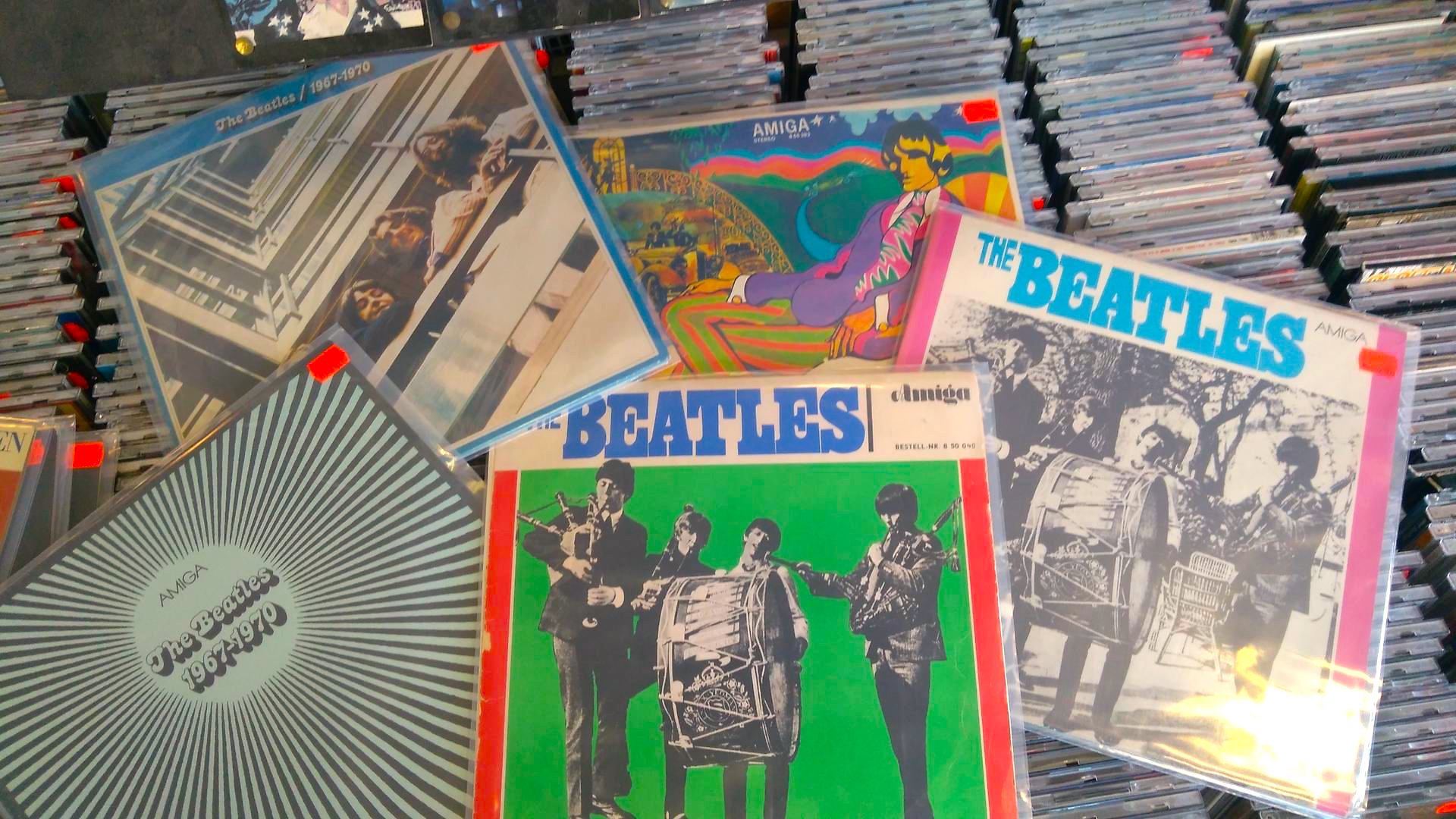
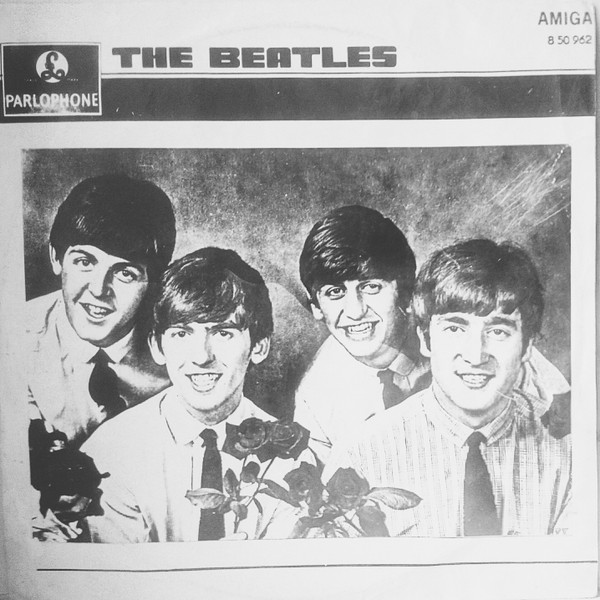
Amiga 8 50 962 (mono, January 1983) is the last and strangest Beatles release in the East German catalogue — and its strangeness is precisely what makes it valuable. No other single LP had ever combined recordings from two separate rights-holders: EMI/Parlophone and Polydor. The next release to do so was Anthology 1 in 1995 — twenty-two years later.
What Makes It Unusual
Alongside a selection of tracks from the first three Parlophone albums, the record contains four recordings from the 1961 Hamburg sessions, previously released by Polydor. Two of them — „Sweet Georgia Brown” and „Why” — feature Tony Sheridan on lead vocals, with the Beatles backing him under the pseudonym the Beat Brothers. The other two are the Beatles performing alone:
„Ain’t She Sweet” is a Tin Pan Alley standard composed by Milton Ager and Jack Yellen, published in 1927. John Lennon sings lead — his first solo lead vocal captured on professional tape, recorded on 24 June 1961 at Hamburg’s Friedrich-Ebert-Halle. Lennon’s arrangement drew primarily on Gene Vincent’s 1956 recording of the song rather than the 1920s original. McCartney recalled later that numbers like this „would be the late-night cabaret material. They showed we weren’t just another rock 'n’ roll group.”
„Cry for a Shadow” is a more significant item than its modest running time suggests. It is the first original Beatles composition to be professionally recorded — and the only song in the group’s entire catalogue credited to Harrison and Lennon alone (as opposed to the standard Lennon-McCartney credit). Originally titled „Beatle Bop”, it is an instrumental parody of the Shadows — Britain’s leading instrumental rock group and Cliff Richard’s backing band — whose sound the Beatles admired and imitated. Harrison later recalled: „John and I were just bull-shitting one day, and he had this new little Rickenbacker with a funny kind of wobble bar on it. And he started playing that off, and I just came in, and we made it up right on the spot.” Pete Best plays drums on all four Hamburg tracks — both the Sheridan accompaniments and the two Beatles-only recordings. He left the group in August 1962, months before the first Parlophone sessions.
Two Pressings — and How to Tell Them Apart
The record sold well enough to be reissued in 1985. Part of that second run was pressed in the USSR by Melodiya for the East German market. These Soviet-pressed copies carry red labels — an immediate visual identifier — and different Melodiya matrix codes: М90-44569/4-1 (Side 1) and М90-44570/4-1 (Side 2).
The rest of the 1985 run was pressed in East Berlin and carries the same blue Amiga labels as the 1983 original — which is where the conventional wisdom gets it wrong. These two pressings are not identical in the runout. The 1985 Berlin pressing has a changed Side 2 matrix code: B85 EC, compared to the 1983 code. So with a torch and a careful eye on the dead wax, a 1983 original can be distinguished from a 1985 Berlin reissue after all.
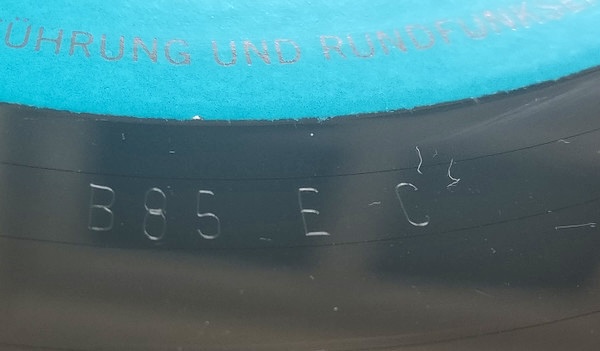
Matrix codes for the 1983 original: 850962-1A L82 W NT (Side 1) / 850962-2A L82 W NT (Side 2).
The Label Error That Crossed the Iron Curtain
The Side 1 label carries a misprint: the Smokey Robinson song „You Really Got a Hold on Me” is listed as „You Really Gotta Hold On Me” — the same spelling error that appeared on the label of the original 1963 UK pressing of With the Beatles. The East German printers appear to have copied the English text directly without proof-reading it, inadvertently preserving a twenty-year-old British misprint on a 1983 socialist state record label — a small but rather pleasing piece of vinyl archaeology.
| The Beatles — Amiga 8 50 962 (GDR, 1983) — pressing identification | ||
| January 1983 |
Original 1983 pressing blue label / Berlin |
Blue Amiga label. Matrices: 850962-1A L82 W NT (Side 1) / 850962-2A L82 W NT (Side 2). The first LP ever to combine EMI and Polydor Beatles recordings on a single disc — 22 years before Anthology 1. Label error on Side 1: „You Really Gotta Hold On Me”.
|
| 1985 |
1985 reissue — Berlin pressing blue label / changed Side 2 matrix |
Blue label — visually identical to the 1983 original. Key differentiator: Side 2 matrix code reads B85 EC instead of the 1983 code. Distinguishable from the original with careful examination of the dead wax. |
| 1985 |
1985 reissue — USSR (Melodiya) red label |
Part of the 1985 reissue run pressed by Melodiya in the USSR for the East German market. Red labels — the only immediate visual identifier. Different Melodiya matrix codes: М90-44569/4-1 (Side 1) / М90-44570/4-1 (Side 2). Cover identical to GDR pressings.
|




Share Your Opinion