
 Vinyl Nostalgia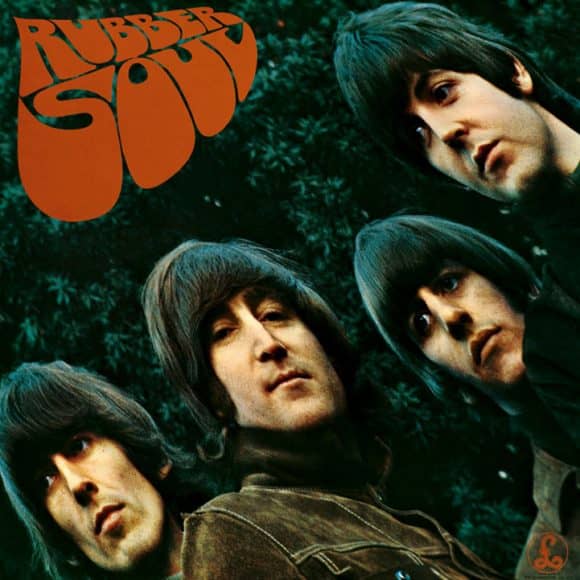
Every now and then a record turns up at a price well below its market value. Recently I managed to pick up a mono copy of Rubber Soul with matrices XEX 579-5 / XEX 580-5 in VG+ condition for 60 Polish złoty — roughly £12 (approx. 16 USD) at the time of writing. The Rare Record Price Guide values this pressing at £45 (approx. 60 USD). It seemed a good occasion to discuss how to tell the pressings apart, what the Loud Cut actually is, and why — despite its commanding prices on the collectors’ market — there is no sonic argument for seeking it out.
Five Days in November: How the Pressings Came to Be
Rubber Soul was released on 3 December 1965, but the story of its mono pressings plays out across a frantic week at EMI’s Hayes pressing plant. On 17 November, staff cutting engineer Harry Moss — identified by the initials HTM stamped in the dead wax — cut the first mono lacquers: XEX 579-1 for Side 1 and XEX 580-1 for Side 2. Pressing began almost immediately, but it was quickly apparent that something was wrong. Shortly into the production run, EMI decided that Moss had cut the album too loud and halted pressing. The copies already manufactured were not destroyed. They reached shops and can be identified today by the -1 suffix in the dead wax — these are what collectors call the Loud Cut.
On 18 November, Moss cut a second set of lacquers (-2/-2), which were also rejected. On 19 November, Hazel Yarwood — one of the most distinguished cutting engineers in EMI’s history, who worked at Abbey Road from 1947 to 1985 and was the first engineer to make a diamond cutting stylus work on lacquer discs — cut a third set (-3/-3). These, too, were set aside. On 23 November she cut the definitive -4/-4 lacquers, which went into mass production in time for Christmas 1965.
In early 1966, following customer complaints about pressing quality, EMI ordered another re-cut. On 28 January 1966, Yarwood cut the -5/-5 lacquers — and these remained the standard mono masters until 1981, when they were also used as the basis for the Metal Master series reissue.
Why the Loud Cut Is Not a Sonic Upgrade
The name „Loud Cut” is somewhat misleading and its origins are disputed — the term may have been coined by a single eBay seller and propagated from there. What is not disputed is that the pressing was recalled for good reason. The -1/-1 cut lacks body, has a muddled bass, and the vocals sound stretched thin and aggressive — tonally unbalanced rather than simply louder. The market has nonetheless elevated it to trophy status, primarily because rarity correlates with price regardless of listening quality.
There is broad consensus among serious listeners that the -5/-5 Yarwood cut sounds best: well-balanced dynamics, a clear and defined bass, and vocals that sit naturally in the mix. EMI itself reached the same conclusion — the 1981 reissue used Yarwood’s 1966 lacquers as its source. My copy, acquired for the equivalent of a few pints, sits exactly there.
A Note on the Numbering
How many pressings there are depends on which guide you consult. The Yoko Ono catalogue (The Beatles Record Collection) recognises three mono pressings:
-1/-1 as the first
-4/-4 as the second
-5/-5 as the third
The Rare Record Price Guide and The Beatles Collection treat -4/-4 and -5/-5 as a single second pressing, distinguished by label variants and production dates. My copy (-5/-5) is therefore the third pressing by the Yoko Ono count, or part of the second pressing by the Price Guide count — which is why the terminology around this record is occasionally confusing.
Also worth knowing: transitional copies exist that mix one loud-cut side with one corrected side — XEX 579-1 paired with XEX 580-4, or XEX 579-4 with XEX 580-1. These are uncommon but not rare, and they represent neither pressing in its intended form.
Identifying the Labels
All original mono pressings carry the black and yellow Parlophone label with the large PARLOPHONE logo and the 33⅓ RPM designation printed above it to the left. The phrase „SOLD IN U.K. SUBJECT TO RESALE CONDITIONS…” must be present. Loud Cut copies appear with both typefaces — sans-serif is more common on the earliest pulls, with serif appearing slightly later within the same production run. The two versions differ in the size of the catalogue number on the right side of the label and the positioning of the pressing date relative to the side number on the left.
| The Beatles — Rubber Soul (mono, PMC 1267) — UK pressing identification | ||
| 3 Dec 1965 |
1st pressing — Loud Cut XEX 579-1 / XEX 580-1 |
Lacquers cut by Harry Moss (HTM) on 17 November 1965. Production halted after a short run due to tonal imbalance: muddled bass, overly aggressive vocals. Black and yellow label with SOLD IN U.K. — two label typeface variants (sans-serif and serif). Sleeve printed by Garrod & Lofthouse or Ernest J. Day. A genuine collectors’ rarity, but not the best-sounding version of the record. The most highly priced pressing in the price guides — for rarity, not sonic quality. |
| Dec 1965 — 1966 |
2nd pressing (per Yoko Ono) XEX 579-4 / XEX 580-4 |
Lacquers cut by Hazel Yarwood (HMY) on 23 November 1965 — the standard Christmas 1965 pressing. Well-balanced sound, legible bass. Black and yellow label with SOLD IN U.K.; serif or sans-serif typeface. Transitional copies exist with one -1 side and one -4 side — these represent neither pressing in its intended form and are not sonically preferable to either. Per Rare Record Price Guide and The Beatles Collection: part of the „second pressing.” |
| 28 Jan 1966 — 1981 |
3rd pressing (per Yoko Ono) / 2nd per RRPG XEX 579-5 / XEX 580-5 |
Lacquers cut by Hazel Yarwood on 28 January 1966, following customer complaints about pressing quality. Widely regarded as the best-sounding mono version: excellent dynamics, clear bass, natural vocal presentation. These lacquers were used as the source for the 1981 Metal Master series reissue. Black and yellow label with THE GRAMOPHONE CO. LTD.; sans-serif typeface with the matrix number misaligned left of the datestamp. My copy, acquired in VG+ condition for 60 PLN (approx. 15 USD). |
| 1981–1982 |
4th pressing — Metal Master XEX 579-5 or -6 / XEX 580-5 |
Metal Master Mono series reissue (1980–1982). Black and yellow label with revised perimeter text: „ALL RIGHTS OF THE PRODUCER” and „MANUFACTURED IN THE UK BY EMI RECORDS LIMITED.” Unlaminated sleeve. Side 1 is sometimes cut from a new lacquer (-6, by HTM, 26 June 1981); Side 2 retains Yarwood’s 1966 -5 lacquer throughout. |
Below is an interesting video by a UK Beatles record collector presenting 26 different editions of „Rubber Soul”.