Vinyl Nostalgia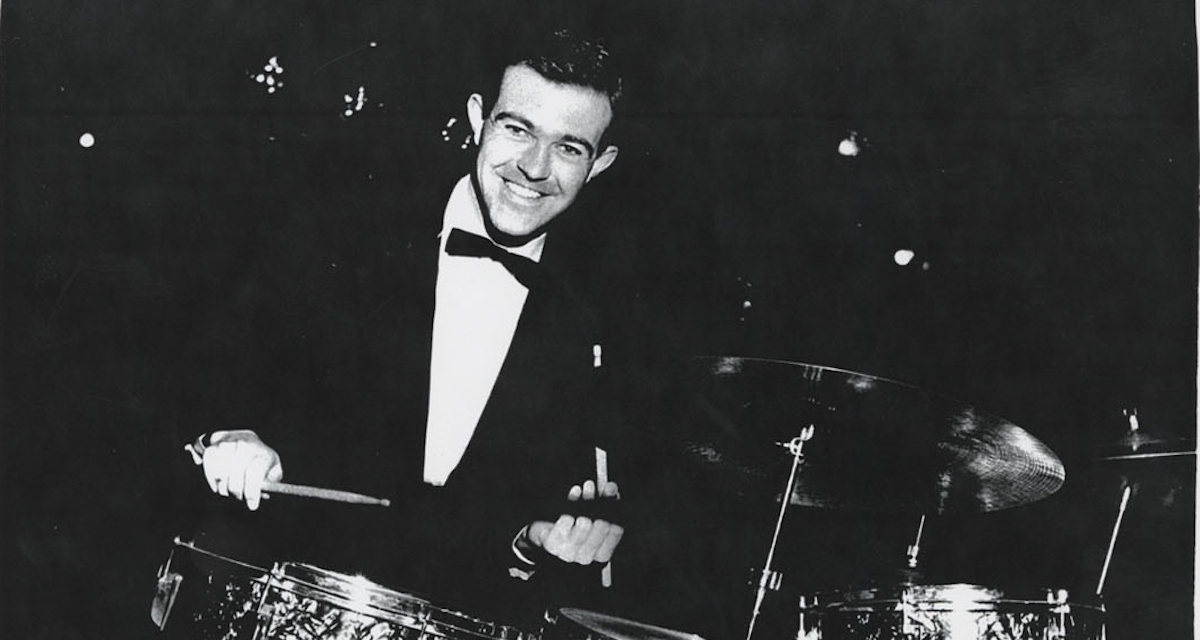
Every Beatles collector knows the tamburine test. Press „Love Me Do” to your ear and listen for it: if the tambourine is there, cutting through behind McCartney’s vocal, you’re hearing Andy White. If it isn’t, the stool belongs to Ringo. It’s one of the more elegant fault lines in the entire canon — a pressing variant with a human story attached.
Three Drummers, One Single
„Love Me Do” was recorded by the Beatles on three occasions, each time with a different drummer. The first attempt, in June 1962, featured Pete Best — a version considered lost for years and eventually surfacing on Anthology 1. By the time the band returned to Abbey Road on 4 September, Best had been replaced by Ringo Starr, the Merseybeat veteran who’d been sitting in for him at gigs. Both producer George Martin and engineer Ron Richards agreed that Best’s drumming had been unsuitable; now, with Starr only two weeks into the job, Martin remained unsatisfied with the 4 September drum sound.
Martin decided that as „Love Me Do” was going to be the group’s debut release it needed to be re-recorded. Record producers at the time were used to hearing the bass drum lock in tightly with the bass guitar, as opposed to the much looser R&B feel that was beginning to emerge — so professional show-band drummers were routinely used for recordings.
On 11 September, the Beatles recorded „Love Me Do” a third time, with session drummer Andy White replacing Starr on drums and Starr relegated to playing tambourine. A crucial detail the Polish fan press often gets wrong: it was Ron Richards, not Martin, who booked the session. White later confirmed that Martin „could not make the session, could not get there till the end, so he had Ron Richards handle it.”
White, for his part, recalled arriving with minimal briefing. „One Friday, I got a call asking if I could do a three-hour job at EMI on the Monday. That’s all I knew about it,” Ultimate Classic Rock he told the Daily Record years later. He was paid a standard session fee of £5 (approx. 7 USD) 15s and earned no royalties from the recordings.
That day’s work yielded three tracks: „Love Me Do” (Starr on tambourine), „P.S. I Love You” — on which White played a lightweight cha-cha-chá pattern on bongos rather than full kit, with Starr on maracas Wikipedia — and a run-through of „Please Please Me.” White would later insist, in a 2012 BBC interview, that his drumming also appeared on the released version of „Please Please Me”: „From the drum sound I can tell that I was on it, because it was a vastly different sound to Ringo’s drumset at that time. This was before he got the Ludwig kit.” The claim remains contested.
The pressing question
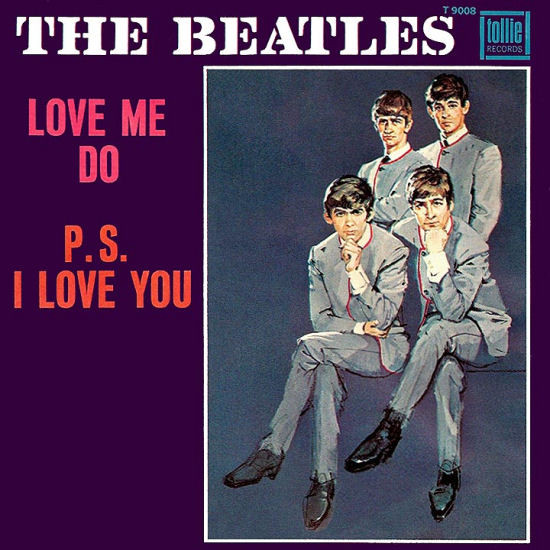
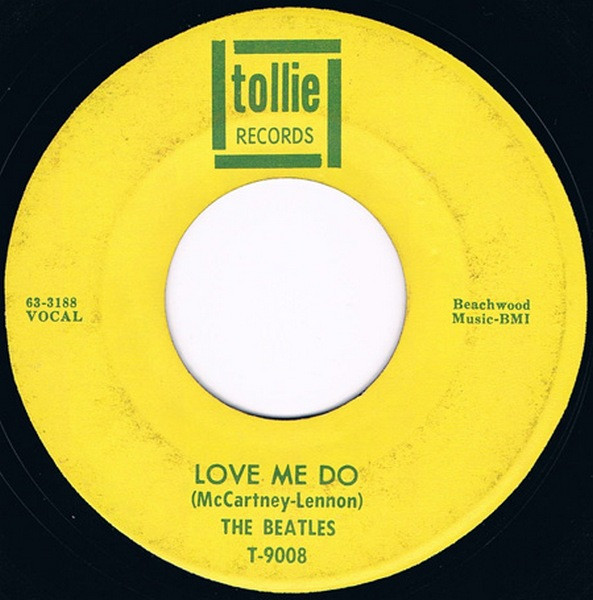
The pressing history of „Love Me Do” is, frankly, a collector’s headache — and a gift. The version with Starr on drums appeared on the earliest British pressings of the single in 1962. The version with White on drums was used on the first American pressings (Tollie label, April 1964), on all later releases of the single, and on the debut album Please Please Me. Those early UK Parlophone 45s with Ringo behind the kit — no tambourine, slightly looser feel — are consequently among the most sought-after Beatles singles, the Starr version having been effectively superseded for decades by the White recording.
The fan identification shorthand remains reliable: hear the tambourine, and you’re listening to Andy White.
From Stranraer to Abbey Road
Andrew McLuckie White was born in Stranraer on 27 July 1930, the son of a baker. At the age of 12 he started playing drums in a pipe band, and became a professional session musician at the age of 17. His route to the top of London’s session circuit was anything but conventional. A swing and jazz drummer as well as a rock 'n’ roll one, he toured the US in the 1950s with the Vic Lewis Band, appearing alongside Chuck Berry and Bill Haley & the Comets.
After Abbey Road, the commissions kept coming. White played on Tom Jones’s hit „It’s Not Unusual” and on Lulu’s „Shout,” and worked with Rod Stewart, Herman’s Hermits, and Anthony Newley among others. Perhaps the most glamorous chapter came when he joined Marlene Dietrich’s touring band, under the musical direction of a then-unknown Burt Bacharach. The Scotsman AllMusic would later describe him as „one of the busier drummers in England from the late 1950s through the mid-1970s.”
After relocating to New Jersey in the 1980s, White taught Scottish pipe-band drumming and judged competitions — the pipe-band world, it turns out, had never really let him go. In 2008, after Beatles expert Tom Frangione introduced him to New Jersey rock band the Smithereens, White recorded a new version of „P.S. I Love You” for their Beatles B-sides tribute album B-Sides The Beatles. He was in his late seventies, and by all accounts his precision hadn’t dimmed.
White died in November 2015, aged 85, after suffering a massive stroke. His family remembered him for his „amazing humility about his many achievements” — a drummer who had laid down the rhythm on one of the most recognisable singles in history, received no royalties, and got on with the job.
Ten Days in the Eye of the Storm: Jimmy Nicol
White wasn’t the only drummer to stand in for Ringo at a critical moment. In June 1964, on the morning of 3 June — the day before the Beatles’ world tour was due to begin — Ringo Starr fell ill during a photo session, fainting and being taken to hospital with severe tonsillitis. George Martin suggested Jimmie Nicol as a replacement, having recently used him on a recording session. Nicol had also drummed on a budget-label album of Beatles cover versions, which meant he already knew the songs and their arrangements. The decision wasn’t unanimous: George Harrison balked, insisting that without Ringo it simply wasn’t the Beatles — and George Martin later recalled it taking considerable persuasion from both himself and Epstein to bring Harrison around.
Nicol’s first rehearsal with the Beatles was at 3pm on 3 June at Abbey Road, lasting just one hour, covering six songs from the current stage set. He played his first concert with the band just 27 hours later, at the KB Hallen in Copenhagen, in front of 4,500 fans, wearing Ringo Starr’s suit with clothes pegs at the back to make it fit.
Nicol played a total of eight shows across Denmark, the Netherlands, Hong Kong, and Australia until Starr rejoined the group in Melbourne on 14 June. Not wishing to wake the others when he left, Nicol departed quietly in the night. At the airport, Epstein presented him with a gold Eterna-matic wristwatch inscribed „From The Beatles and Brian Epstein to Jimmie — with appreciation and gratitude,” along with a cheque for £500 (approx. 662 USD).
The aftermath was less kind. Nicol later said: „Standing in for Ringo was the worst thing that ever happened to me. Until then I was quite happy earning £30 (approx. 40 USD) or £40 (approx. 53 USD) a week. After the headlines died, I began dying too.” The Vintage News His subsequent bands failed commercially; he went bankrupt, his wife divorced him, and he grew increasingly reclusive. Ultimate Classic Rock There is one small, accidental legacy: whenever the Beatles asked Nicol how he was coping during the tour, his stock answer was „It’s getting better” — a phrase McCartney later turned into a song for Sgt. Pepper’s Lonely Hearts Club Band.
Two drummers, two very different trajectories. White lived quietly in New Jersey, teaching pipe-band students and occasionally turning up with the Smithereens, content in his own skin. Nicol retreated further from view with each passing decade — last reported in Mexico, his whereabouts uncertain even to his own family. What connects them is a single, strange fortnight in the Beatles’ story: the brief, vulnerable moment before Ringo Starr became truly irreplaceable.
The tambourine is still the giveaway.
| 1. „Love Me Do” | ||
| 1962 | Ringo’s version (no tambourine) UK Single | Issued only on the first UK pressing of the single (45 rpm). The original master was likely destroyed or recorded over and replaced by the White version. Now available on Past Masters and as the B-side of the Now and Then single (2023). |
| 1963– | White’s version (with tambourine) LP / Compilations | Appears on the debut album Please Please Me (1963) and the EP The Beatles’ Hits. Used on the first US pressings (Tollie label, April 1964) and all subsequent single releases. Heard on the compilations 1962–1966 (the „Red Album”) and 1. Collector’s shorthand: hear the tambourine — that’s Andy White. |
| 2. „P.S. I Love You” | ||
| 1962– | White’s version (Ringo on maracas) Only version | The only released studio version. B-side of the „Love Me Do” single and included on Please Please Me. Note: White played bongos here in a light cha-cha-chá pattern — not a full kit. Ringo on maracas. Present on all album releases of the track (live recordings and BBC sessions aside). |
| 3. „Please Please Me” | ||
| 1962 | Early version (11 September) Unreleased | Recorded without harmonica. White claimed in a 2012 BBC interview that he can identify his own drum sound on the released hit single — the point remains disputed. The 11 September session was the only day White ever played with the Beatles. |
| 26 Nov 1962 | Hit version (Ringo Starr) Single / LP | The definitive, familiar version — recorded two weeks after the White session. Ringo on drums, now with his characteristic Ludwig kit. Released as a single (11 January 1963) and on the album Please Please Me. |