Vinyl Nostalgia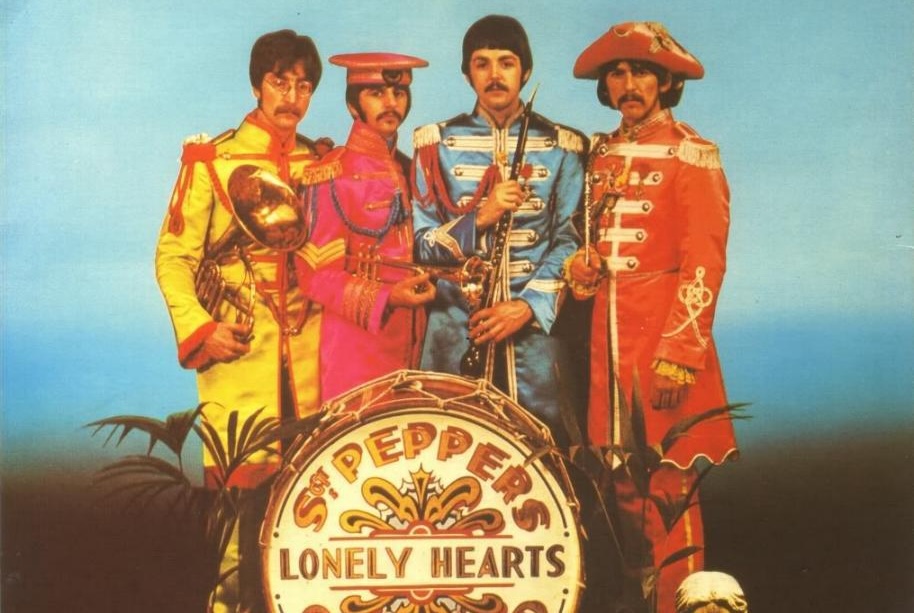
There are certain albums in the history of music that always prompt a sigh at the very start of any discussion. Pet Sounds, Dark Side of the Moon, Kind of Blue, Thriller. But there is one album that always comes up in these conversations—and always as a benchmark, never as a contender. Sgt. Pepper’s Lonely Hearts Club Band, The Beatles’ eighth studio album, released on June 1, 1967, in the UK and a day later in the US, has been haunting critics, musicologists, and vinyl collectors for nearly six decades. The question I posed in the title is deliberately provocative—but it deserves an honest answer.
The moment when popular music came of age
To understand the significance of Sgt. Pepper, we need to go back to the situation the Beatles found themselves in at the end of 1966. They had finished their concert tours, were burned out, and tired of the image of “four nice boys from Liverpool.” McCartney later recalled bluntly:
It was out of this weariness that the idea Paul came up with on the plane returning from Kenya was born: let’s pretend we’re someone else—let’s invent an alter ego band and record an album through their eyes. “Pepper was probably the only Beatles album I can say was my idea,” McCartney said years later. “It was very liberating. We could do anything when we stood at the microphone, because it wasn’t us anymore.” John Lennon, always more skeptical of his bandmate’s ideas, later admitted that the alter ego concept really only appears in the title track and the reprise—but he had no doubt that it was precisely this “screen” that gave the band a freedom they hadn’t had before. The result? Four hundred hours of work at Abbey Road Studios, thirteen tracks, produced by George Martin and engineered by Geoff Emerick, which are still the subject of analysis in sound engineering schools today. Five tapes, the sitar sounds in “Within You Without You,” a forty-piece orchestra in the crescendo of “A Day in the Life,” animal noises in “Good Morning Good Morning”.– We were tired of being the Beatles. We were really fed up with that “four little mopheads” approach. We weren’t boys anymore; we were men.
Voices That Cannot Be Ignored
When Rolling Stone magazine compiled its famous list of the 500 greatest albums of all time, the editors didn’t mince words: Sgt. Pepper’s Lonely Hearts Club Band was named the most important rock and roll album ever recorded—an unrivaled feat in terms of concept, sound, songwriting, cover art, and studio technology, created by the greatest rock band of all time. The album had held the top spot on this list twice before being moved to 24th place in a more recent edition—a move that sparked a critical storm and became a controversial media event in its own right. Professor Kevin J. Dettmar of the Oxford Encyclopedia of British Literature goes even further, calling Sgt. Pepper “the most important and influential rock and roll album ever made.” In 2003, the U.S. Library of Congress added the album to the National Recording Registry as “culturally, historically, and aesthetically significant.” And when the British Official Charts Company tallied the sales, streams, and downloads of every album in the history of the British market in 2019, Sgt. Pepper topped the list—ahead of Adele’s 21 and Oasis’s (What’s the Story) Morning Glory? Brian Wilson, co-founder of The Beach Boys and producer and principal composer of the album Pet Sounds, once summed up the entire dialogue of that musical era in a single sentence:McCartney has recounted many times that after their first listen to Pet Sounds, the Beatles were in shock: “Oh my God. This is the album of all time. What the hell are we supposed to do now?” The answer was Sgt. Pepper. American poet Allen Ginsberg said something remarkably significant about the album: after the apocalypse of Hitler and the apocalypse of the Bomb, it was “a cry of joy, a rediscovery of what it means to be alive.” Counterculture psychologist Timothy Leary called the Beatles “avatars of a new world order.” Langdon Winner, meanwhile, wrote in Rolling Stone that Western civilization had come closest to unity since the Congress of Vienna in 1815 during the very week Sgt. Pepper was released. Radio stations in every city across Europe and America played it nonstop.– Rubber Soul inspired Pet Sounds, which inspired Sgt. Pepper, which inspired me to make Smile.
Hendrix, who performed the song three days after its release
There is one anecdote that says more about the impact of this album than any sales chart ever could. On Sunday, June 4, 1967—just three days after the album’s UK release—Jimi Hendrix performed at London’s Saville Theatre. The curtain opened, and Hendrix walked onto the stage, playing „Sgt. Pepper’s Lonely Hearts Club Band”. Paul McCartney and George Harrison were sitting in the audience. McCartney recalled this memory dozens of times:Learning the title track from an album that was only three days old and playing it in front of its creators—that’s the kind of tribute you never forget. Hendrix, by the way, played “Sgt. Pepper” throughout 1967, right up to the legendary concert on the Isle of Wight.– Jimi was a sweetheart, a really nice guy. I remember when he opened at the Saville on Sunday evening, June 4, 1967. Jimi came out, the curtain parted, and he walked forward playing Sgt. Pepper, even though the album had only been released on Thursday, so that was the highest compliment for us.
The album cover that became a meme before memes were even invented
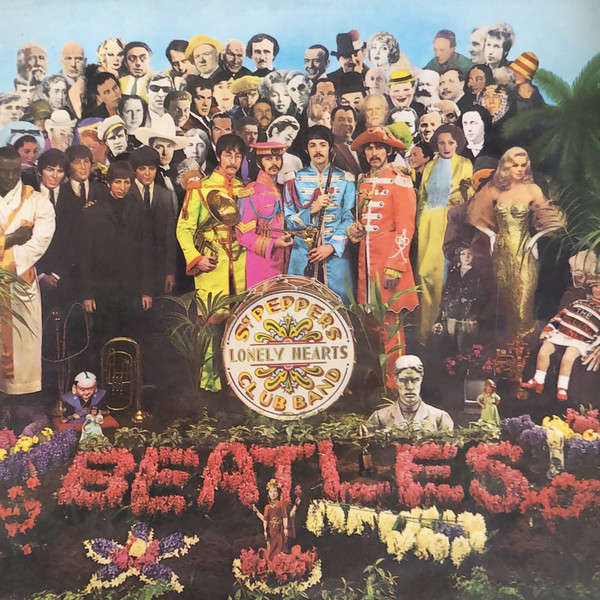
One could write an entire book just about the cover itself—the one designed by Peter Blake and Jann Haworth, featuring the four Beatles in colorful uniforms in front of a crowd of cardboard cutouts of celebrities. Marilyn Monroe, Carl Jung, Marlon Brando, Bob Dylan, Karl Marx, Oscar Wilde, Lewis Carroll, Edgar Allan Poe, Aleister Crowley, wax Beatles from Madame Tussauds standing next to their real, more bearded versions. This isn’t an album cover—it’s a manifesto that popular music can speak to all areas of culture at once. And then the parodies, tributes, and references began. Frank Zappa and The Mothers of Invention released We’re Only in It for the Money in 1968, whose cover was—as Zappa himself put it—“a direct negative” of the original. “Sgt. Pepper had a blue sky; we had a thunderstorm.” Interestingly, the real Jimi Hendrix posed on Zappa’s cover—it’s not a cutout; it’s Hendrix himself. The Rolling Stones responded later that same year with the kaleidoscopic Their Satanic Majesties Request. The Rutles, Eric Idle’s parody band from Monty Python, recorded Sgt. Rutter’s Only Darts Club Band. The Simpsons parodied the cover on The Yellow Album—even the couch gags in the episode “Bart After Dark” referenced Pepper. The Sex Pistols were—against their will—immortalized on the illegal Swedish release Bad Boys in a similar style. Pink Floyd had their own bootleg, Lonely Hearts In Pepperland. British art director Chris Barker used the cover’s formula to commemorate the stars who died in the tragic year of 2016—among them Bowie, Prince, and Muhammad Ali. Even the death metal band Macabre released a version in 1993 featuring serial killers instead of Mae West and Gandhi. The list is absurdly long. That is the phenomenon of Sgt. Pepper: you cannot parody it without simultaneously paying homage to it. Every reference, even a mocking one, confirms its central place in the collective imagination.Criticisms That Need to Be Heard
I would be dishonest if I didn’t mention the skeptical voices—and they exist, and they are serious. A group of scholars writing for The Conversation on the album’s 50th anniversary pointed out that constantly calling Sgt. Pepper “the best album in history” obscures the African roots of music and devalues everything that came after, and our tendency to “fetishize the past” takes away from the music of today’s twenty-somethings.There is a lot of truth to this. John Lennon himself distanced himself from the album’s concept years later, saying that aside from the title track and “With a Little Help from My Friends,” “every other song could have been on any other album.” Brian Epstein also made, according to George Martin, “the biggest mistake of his professional life” by not including the single Strawberry Fields Forever / Penny Lane on the album—two songs that many critics consider the Beatles’ crowning achievements from that session. As I write in another article on this blog, Sgt. Pepper with Strawberry Fields Forever / Penny Lane would have been an album bordering on perfection.
So, the best album of all time?
The honest answer is: “best” is a concept that ceases to be useful when it comes to Sgt. Pepper. There are albums that are more emotionally cohesive (Pet Sounds). There are those that are more radical in sound (Trout Mask Replica). There are those that have had a greater influence on specific genres (Kind of Blue for jazz, Straight Outta Compton for hip-hop). There are those that stand the test of time better in their simplicity (Blood on the Tracks).
But no other album is a turning point to the same extent as Sgt. Pepper. This is the album after which popular music ceased to be treated as entertainment and began to be treated as art. The album after which the very idea emerged that magazines like Vogue or Playboy could review rock. The album that established the concept of the “album” as an artistic entity—a whole, rather than a collection of singles to fill two sides of a vinyl record. And finally, the album that in June 1967 truly was—as Winner wrote in Rolling Stone—the common language of the West for a single week.
For the vinyl collector reading these words, Sgt. Pepper is something else entirely. It’s the album that sounds best on the original British pressing: Parlophone PMC 7027 (mono) or PCS 7027 (stereo). It’s the record where, for the first time, you can truly hear why it’s worth having a good turntable. And that rustle of the needle dropping into the inner groove after “A Day in the Life”—that silence after the final, lingering piano chord held for forty seconds—is perhaps the most resonant silence in the history of popular music.
So is this the best album of all time? We can argue about that, but one thing is beyond dispute: no other album has redefined what an album can be. And for me, when I pull my copy off the shelf, that question isn’t important at all (though personally, I consider Pepper to be number 1). The only thing that matters is what happens over the next 39 minutes and 52 seconds.