
 Vinyl Nostalgia
8. „Within You Without You” – the final track recorded for Sgt. Pepper’s Lonely Hearts Club Band, and the only one on the album not only not composed by Lennon and McCartney but also recorded without their involvement. Ringo Starr was also absent during the four days (March 15 and 22, and April 3 and 4, 1967) when this song was recorded.
George Harrison, who wrote the lyrics and music, played sitar and acoustic guitar, while the remaining parts were performed by traditional Indian musicians from the Asian Music Circle in Finchley, north London. Their names were not included on the album cover, and their contributions to the song remained completely anonymous until June 2017, when they were identified by researchers at the University of Liverpool (source: https://scroll.in/magazine/881709/how-an-indian-man-and-his-english-wife-introduced-george-harrison-to-ravi-shankar-to-create-history).
On the final day of recording for Sgt. Pepper’s Lonely Hearts Club Band, George Martin lined up eight violinists and three cellists to perform additional string backing. That same evening, Harrison also recorded his lead vocals, thus completing this groundbreaking album.
At first glance, the song seems completely out of place, acting as a surprising and rather dull interruption to the dynamic material that lies behind it. After a second and subsequent listen, the impression remains the same, at least for me. This, of course, doesn’t mean that „Within You Without You” is a bad track. On the contrary, it’s interesting and, in its own way, musically brilliant and emotionally engaging, but at this precise point on the album, I’d much rather have „Strawberry Fields Forever,” which would have been a perfect opening track for side two. In any case, you have to get through those little over five minutes somehow, because a lot happens after that!
9. „When I’m Sixty-Four” is a warm, melodic, and slightly sarcastic song composed by 16-year-old Paul McCartney on his father’s piano at his family home at 20 Forthlin Road, eight years before it was recorded in the studio.
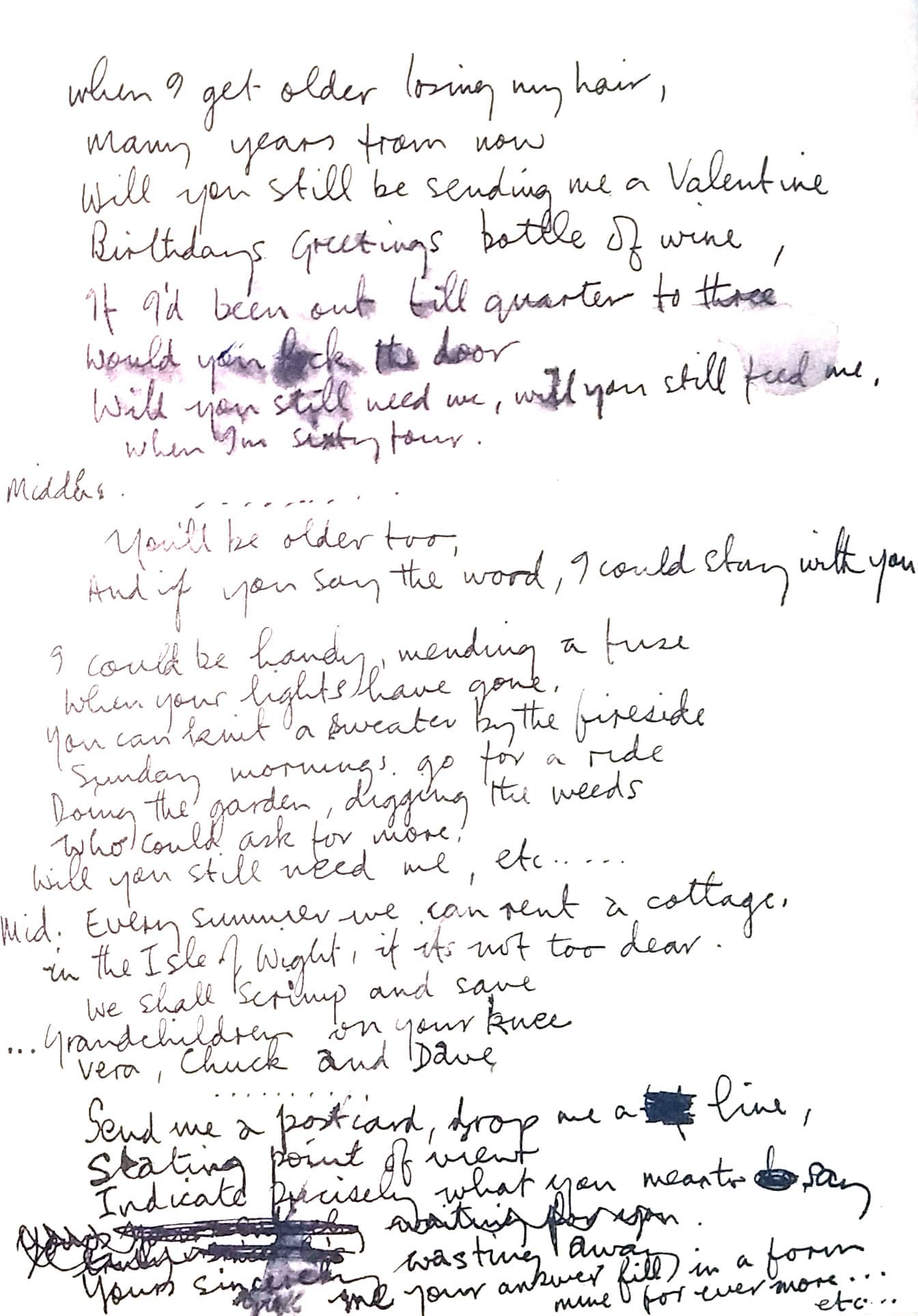
McCartney played this song sporadically during the band’s early career during performances at the Cavern Club, when the sound system would go out and the only instrument available (aside from the drums) was the piano. „When I’m Sixty-Four” worked brilliantly as a filler, and the other members of The Beatles remembered it well.
According to George Martin, its great advantage was that it didn’t sound like a Beatles song at all.
„At the time, I didn’t necessarily want to be a rock 'n’ roller. When I wrote 'When I’m Sixty-Four,’ I thought I was writing a song for Sinatra. Other albums were more important to me than rock 'n’ roll at the time,” Paul McCartney himself recalled much later.
„When I’m Sixty-Four” was the first song recorded and completed for the new album. Recording took place on December 6, 8, 20, and 21, 1966, and the song was initially intended to be the B-side of the single „Strawberry Fields Forever.” More on the trials and tribulations surrounding the single’s release here.
George Martin composed the clarinet parts at McCartney’s request, and he invited three clarinetists to perform them. On December 30, the final mono mix was made, during which the song was slightly sped up, raising the key from C to D to make Paul McCartney’s voice sound a bit younger.
10. „Lovely Rita” is a rhythmic, yet satirical, romantic song by Paul McCartney about a parking ticket-issuing cop.
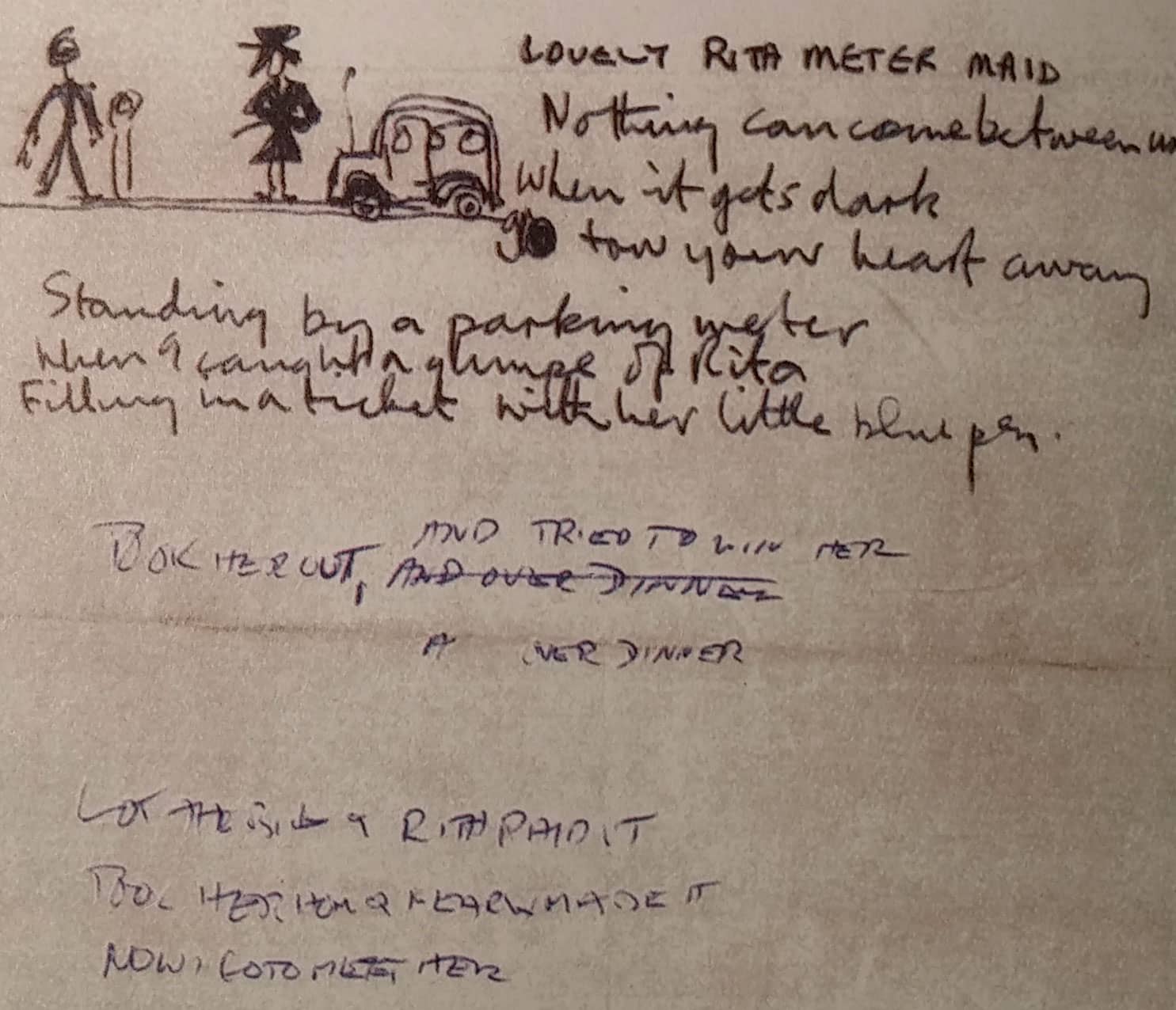
Recording for the song began on February 23, 1967, at Abbey Road Studios. Several versions of the rhythm track were recorded, featuring George Harrison and John Lennon on acoustic guitars, Ringo Starr on drums, and Paul on piano. McCartney then added his bass part. Vocals were recorded on February 24 and March 7, and according to those present at the studio, guests also took the mic, including David Crosby (of the Byrds and Crosby, Stills & Nash) and Shawn Phillips (who worked closely with Donovan). It’s highly likely that their parts weren’t used in the final mix. Instead, sound effects were used, including combs, paper crumpling, and the band members’ sighs and screams.
There’s another interesting fact about „Lovely Rita.” Hunter Davies, author of the only Beatles biography authorized by the Beatles, recalls that during the recording of this song, members of the then-debuting band Pink Floyd visited the studio and were deeply impressed by the professionalism they observed on the other side of the glass separating the control room from the studio.
„They were in a completely different league,” the Floyd’s drummer, Nick Mason, reportedly said.
11. „Good Morning Good Morning” – a musical joke song inspired by a Kellogg’s Corn Flakes commercial Lennon saw on television while composing another song. He never considered it a masterpiece and once even called it „rubbish,” but Paul McCartney believed the song captured John’s state of mind at the time, as he was bored with life and struggling with his marriage.
The song sounds somewhat grotesque, filled with animal sounds (rooster, cat, dogs, horses, sheep, lions, elephants, cows, and chickens), but the brass band makes it sound perfect in the context of the entire album.
12. „Sgt. Pepper’s Lonely Hearts Club Band (Reprise)„—the idea for a reprise of the title theme from Sgt. Pepper was suggested by The Beatles’ assistant, Neil Aspinall, who decided the album should begin and end with a performance of an imaginary band. Ultimately, a one-and-a-half-minute reprise was placed just before the encore, which capped the whole thing off appropriately.
This song was recorded on a single day, April 1, 1967, and is a completely separate recording from the title track. In this case, all the Beatles sing, and the lyrics are slightly different from those used in the album’s opening track.
13. „A Day in the Life” – a monumental track inspired by reading the January 17, 1967, issue of The Daily Mail. It was there that Lennon found a lengthy article about the investigation into the car crash that had killed Tara Browne, a friend of The Beatles and multimillionaire heir to the Guinness brewery fortune, a month earlier. On another website, a text about 4,000 potholes in the streets of Blackburn, Lancashire, appeared, and thus Lennon received the inspiration for the ending of the piece, which was to complete the work on Sgt. Pepper’s Lonely Hearts Club Band.
To record the famous glissando, George Martin hired 40 additional musicians, mostly members of two renowned orchestras: the Royal Philharmonic and the London Symphony. At the very end, a haunting single chord was recorded, lasting over 50 seconds. Lennon, McCartney, Starr, and Mal Evans shared three pianos and, by simultaneously striking the keys, played an E major chord – the final note of the album Sgt. Pepper’s Lonely Hearts Club Band. After the album’s release, the BBC unexpectedly banned the final track, accusing the musicians of promoting substance abuse.