Vinyl Nostalgia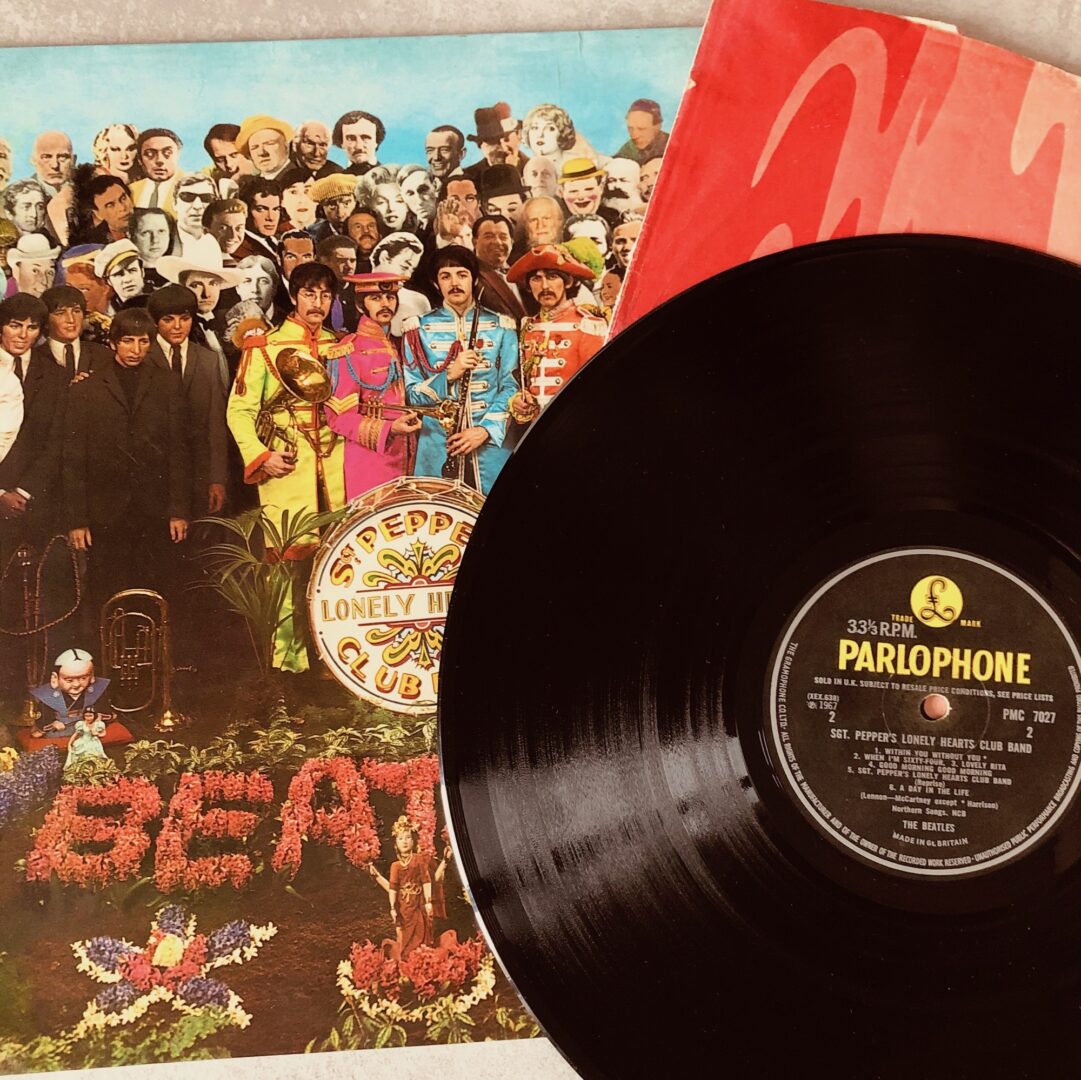
No true collector of The Beatles’ records can imagine their collection without the original 1967 release of the album *Sgt. Pepper’s Lonely Hearts Club Band*. However, finding and identifying the right vinyl can be tricky, especially if you don’t know what to look for. This short guide will help you make sure you’re dealing with the genuine article.
The first edition of Sgt. Pepper was released on June 1, 1967, and you can recognize this earliest version by its label.
First and foremost, the label of the original first pressing features the Parlophone label’s yellow logo and silver lettering (pressings from the UK were yellow, while those from other countries often omitted the yellow color, resulting in a white label logo). The copyright notice begins with the words “The Gramophone Co. Ltd.,” and beneath the yellow label name is the line “Sold in U.K. subject…,” which is absent from this location starting with the third (or second, according to Yoko Ono’s chronology) edition from 1969.
So, if you have a black record in your hands whose label contains “Sold in U.K. subject…” under the name PARLOPHONE, you can be certain that it is one of the first two editions. The final proof will be found on side 2 of this record.
When the second pressing began in 1968, it turned out that the matrices used to print the labels had worn out, and as a result, they were changed. However, an error crept into the new set, and the track “A Day In The Life” was omitted from the track list on the B-side label.
The original pressing will therefore have this song listed on the reverse side of the label, “Sold in U.K. subject…” under the name PARLOPHONE, as well as a noticeably increased line spacing (the space between lines) above THE BEATLES under the track listing.
It is also worth noting that in 1982, a so-called repressing was carried out in the UK, meaning a re-pressing of an identical-looking version, but the word “MONO” was added to the label, which should not appear on the label of the original release.
Finally, it’s worth removing the record itself and checking the matrix code numbers stamped on the record’s run-out groove. There, you should find XEX 637-1 on side 1 and XEX 638-1 on side 2.