
 Vinyl Nostalgia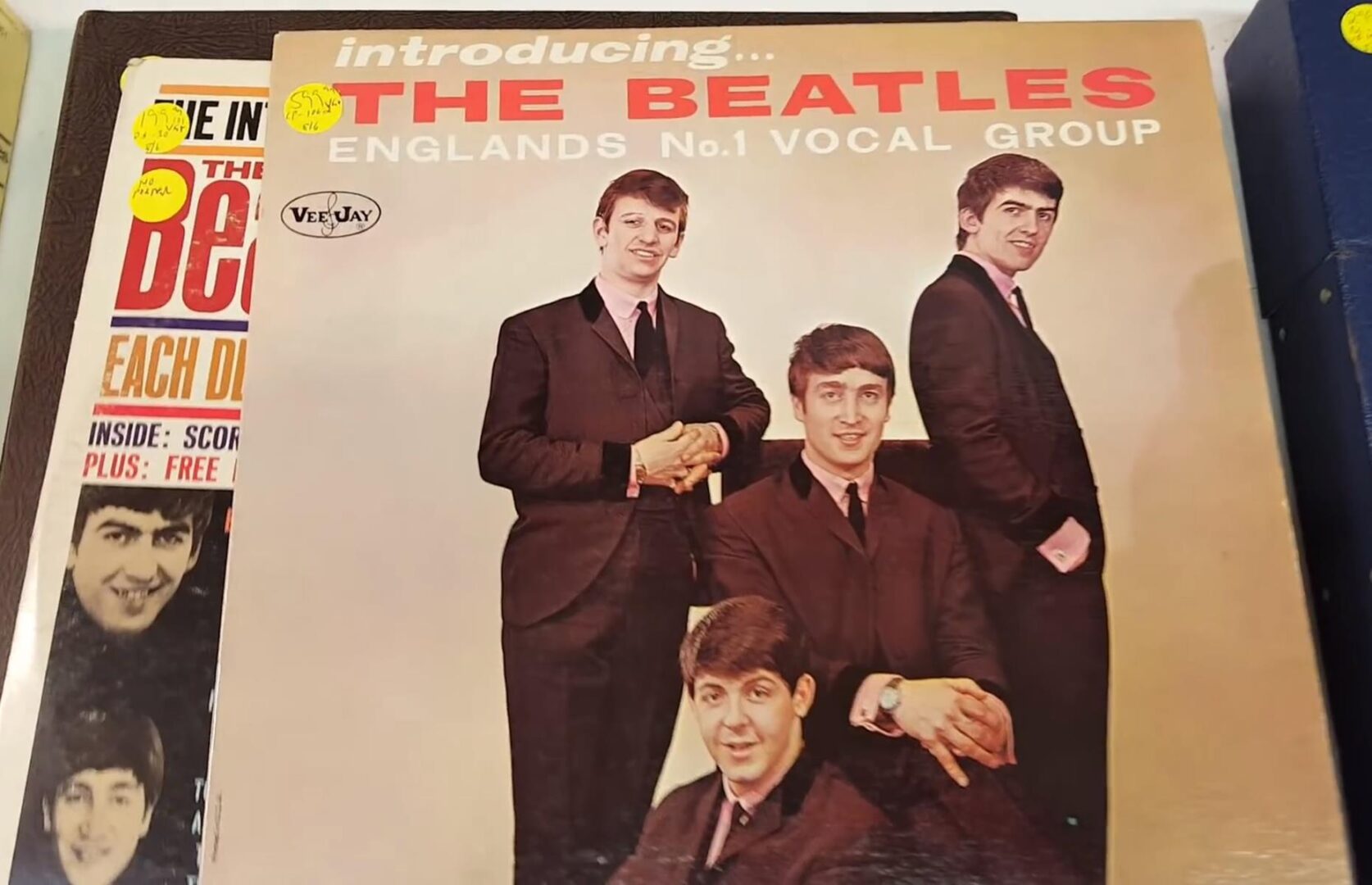
Introducing… The Beatles is the first Beatles album released in the United States — and almost certainly the most counterfeited record in the history of popular music. Estimates put the number of bogus copies that reached the market at over three million, outstripping everything Vee-Jay legally pressed during the album’s entire legitimate run.
How It Happened
Capitol Records, EMI’s US subsidiary, declined to release the Beatles’ debut single. The rights to distribute Beatles material in America passed instead to Transglobal, an EMI affiliate, which signed a licensing deal with Vee-Jay Records — a small Chicago label known for R&B and jazz. The album came out on 10 January 1964, ten days before Capitol’s own Meet the Beatles! Within a week, Vee-Jay received a restraining order. Beechwood Music, Capitol’s publishing subsidiary, owned the American rights to „Love Me Do” and „P.S. I Love You” — both of which appeared on the album without a licence. Vee-Jay replaced them with other titles („Please Please Me” and „Ask Me Why”) and the legal battle ran through most of 1964.
A settlement on 9 April 1964 gave Vee-Jay a licence to sell its Beatles catalogue until 15 October 1964, after which all rights reverted to Capitol. During the full course of its legitimate distribution, the album sold approximately 1,300,000 mono copies and around 41,000 stereo copies. True stereo pressings represented just 3.1 percent of the total run — which is precisely why the counterfeiters focused on them. Almost every fake copy presents itself as a stereo pressing. Almost none of them actually play in stereo.
The counterfeiting operation ran from the late 1960s through the 1980s, with bogus copies appearing not just in specialist shops but in department stores, discount bins and drug stores across the US. Early fakes were crudely made and relatively easy to spot; later runs were considerably more convincing.
How to Spot a Fake
The cover is often the first place to look. The most common counterfeit combines a front cover reading „STEREOPHONIC” with the stereo catalogue number (SR 1062) and a rear „Title Back” cover carrying the mono catalogue number (VJLP 1062). This combination never existed on an original pressing: legitimate stereo copies of Version 1 had either an „Ad Back” cover (promoting other Vee-Jay releases) or a blank white reverse. If you see SR 1062 on the front and VJLP 1062 on the back, you are looking at a counterfeit.
Check the print quality: originals are always on glossy cardboard with sharp, clean printing. Flat, matte, blurry or pinkish-tinted covers are fakes. A brown border around the cover photograph is an immediate disqualifier — no original pressing has one. George Harrison’s shadow should be visible near the right edge of the cover photograph; most (though not all) counterfeits omit it.
The label offers one of the most reliable tests. On every genuine pressing, both the album title and the name „The Beatles” appear above the spindle hole. On counterfeits, the title is above the hole but „The Beatles” appears below it. There are no exceptions to this rule. Check also the size of the Vee-Jay logo: counterfeit labels tend to print it significantly larger than on the originals.
If the cover claims stereo, look at the label. A genuine stereo copy has the word „STEREO” printed on the disc label itself — not just on the cover. If the label says nothing about stereo, the disc plays mono, whatever the sleeve claims.
The dead wax provides the most reliable confirmation of all. Original pressings carry a machine-stamped mark in the runout groove: either the word „AudioMatrix”, the letters „MR” inside a circle, or the letters „ARP” in italics. These marks are pressed into the vinyl by machine. Counterfeits do not have them. Check also the vinyl weight: original pressings used surprisingly thick vinyl; counterfeits tend to be noticeably thinner.
My own copy carries the matrix codes 63-3402-RE-1 (Side 1) and 63-3403-6 (Side 2). Matrix numbers alone are insufficient to confirm authenticity — what matters is whether they are machine-stamped (original) or hand-scratched (fake).
| Introducing… The Beatles (Vee-Jay, 1964) — original vs counterfeit identification guide | ||
| Cover | ||
| Front |
Print quality original |
Sharp, clear printing on glossy cardboard. Grey or tan background. No brown border around the cover photograph — if present, it is a fake without exception. George Harrison’s shadow visible near the right edge of the cover (absent on most, though not all, counterfeits). |
| Rear |
Back cover type key indicator |
Genuine stereo Version 1: rear cover is either an „Ad Back” (advertising other Vee-Jay releases) or a plain white blank. Counterfeit: stereo front (SR 1062) paired with a „Title Back” rear carrying the mono number (VJLP 1062) — this combination never existed on an authentic pressing. The single most common and reliable counterfeit indicator. |
| Label | ||
| Label |
Position of band name no exceptions |
Original: both the album title and „The Beatles” are printed above the spindle hole. Counterfeit: title above the hole, „The Beatles” below it. No exceptions. The Vee-Jay logo on fakes is also noticeably larger than on originals. |
| Label |
The word „STEREO” on the label — not the cover |
Genuine stereo copies have the word „STEREO” printed on the disc label itself, not only on the cover. If the cover says stereo but the label does not: fake. True stereo copies account for only ~41,000 of the total run — approximately 3.1%. The overwhelming majority of „stereo” copies on the market are counterfeits. |
| Dead wax (runout groove) | ||
| Dead wax |
Machine-stamped markings definitive confirmation |
Genuine pressings carry one of the following machine-stamped (not hand-scratched) marks in the runout: „AudioMatrix”, the letters „MR” inside a circle, or „ARP” in italics. Counterfeits have none of these. Vinyl weight is also a guide: originals are surprisingly thick; fakes are thinner. |
| Dead wax |
My copy for verification |
Matrix codes: 63-3402-RE-1 (Side 1) / 63-3403-6 (Side 2). Matrix numbers alone are insufficient to confirm authenticity — what matters is whether they are machine-stamped (original) or hand-scratched into the vinyl (counterfeit).
|